
Phosphorus Removal at Rhiwsaeson WwTW


Achieving Reliable Ultra‑Low Phosphorus Compliance using the HUBER Pile Cloth Media Filter RotaFilt®
Client: Dŵr Cymru Welsh Water,
Site: Rhiwsaeson Wastewater Treatment Works (Trickling Filter site, 51 l/s FFT)
The Challenge
With increasingly stringent Total Phosphorus (PTₒₜₐₗ) consent limits on the horizon, Rhiwsaeson WwTW required a robust, future‑proof tertiary treatment solution capable of consistently achieving 0.1 mg/l PTₒₜₐₗ
The solution also needed to perform reliably under:
- Variable flows and seasonal temperatures,
- Wet and dry weather conditions,
- Periods of upstream biological stress and planned maintenance, and
- Existing chemical dosing arrangements.
The Solution
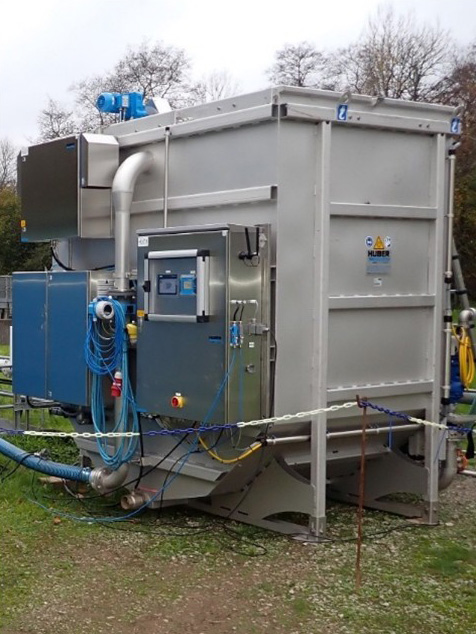
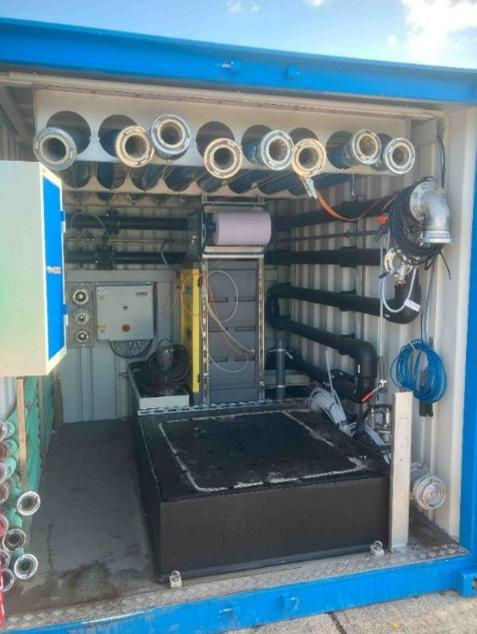
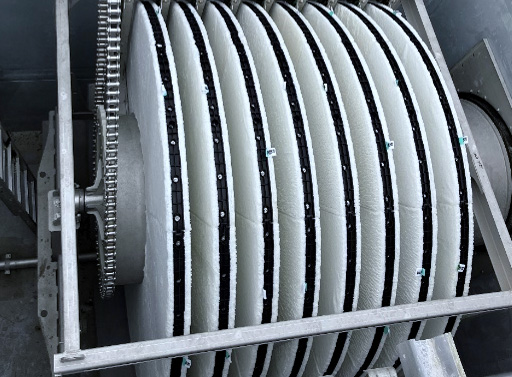
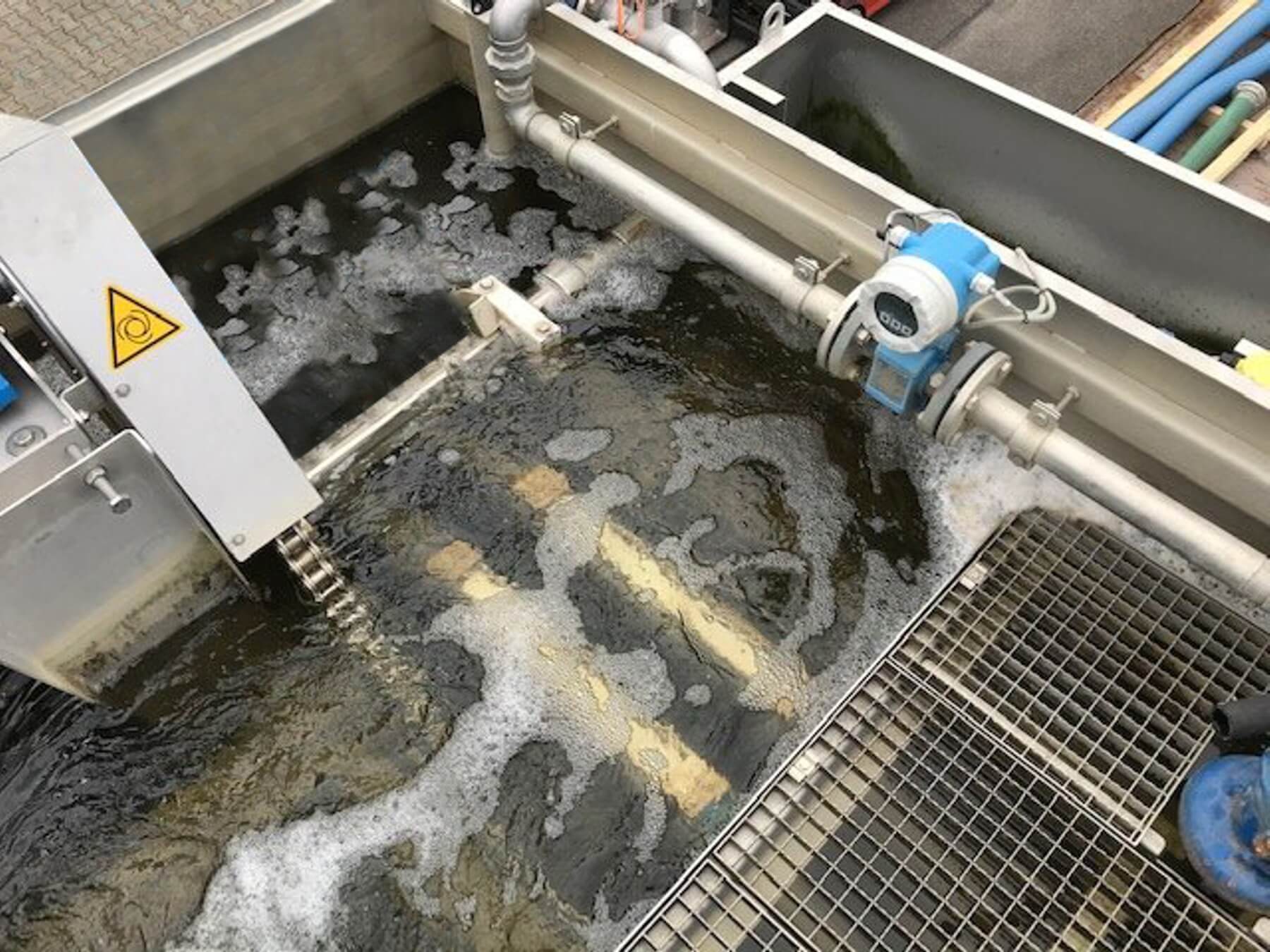
A HUBER RotaFilt® TSR pile cloth filter, supplied as a free‑standing demonstration unit, was installed alongside a compact tertiary coagulant dosing system housed in a small ancillaries container.
The RotaFilt® system was trialled from November 2024 to July 2025, allowing performance to be assessed across a full range of operating conditions.
Performance Results
The trial clearly demonstrated that the RotaFilt® system:
- Consistently achieved ≤0.1 mg/l Total Phosphorus,
- Maintained effluent quality without adverse impacts on other parameters,
- Operated reliably across seasonal temperature changes, and
- Performed effectively even during upstream process challenges.
Importantly, the system showed strong resilience, continuing to meet phosphorus targets when the biological treatment process was not operating optimally.
Operational Insights & Process Benefits
The trial delivered valuable operational data and optimisation opportunities:
Insensitivity to Dosing Set-up
The degree of mixing after dosing and flocc retention time were not critical to ensure effective phosphorus removal performance. When the upstream biology was underperforming, however, ≥ 5.5 outgoing pH was realised by maintaining:
- ≥0.5 m/s velocity through the static mixer, and
- ≥90 seconds flocc retention time.
Smarter Chemical Control
A clear relationship was identified between the incoming turbidity and PTₒₜₐₗ concentration.
This enables more accurate, demand‑based coagulant dosing, rather than relying solely on flow‑proportional control.
Low Maintenance, High Resilience
A deliberately induced partial clogging event demonstrated:
- Rapid recovery,
- No need for chemical cleaning, and
- No removal of filter discs was required.
Furthermore, over 9 months of continuous operation:
- No deep cleaning of the pile cloth media was necessary, and
- The natural humus build‑up during warmer months was easily managed using a simple, operator‑friendly method.
These confirmed the RotaFilt® system’s low maintenance burden and high operational robustness.
Operational Cost Savings
A key outcome of the trial was the discovery that:
- Target phosphorus levels were achieved without increasing tertiary coagulant usage when the primary ferric dosing stage was inactive.
This finding highlights the significant potential for chemical OPEX savings, particularly for sites reviewing or rationalising existing dosing strategies.
Conclusion
The RotaFilt® system proved to be a reliable, efficient, and low‑maintenance solution for ultra‑low phosphorus removal at Rhiwsaeson WwTW.
The HUBER RotaFilt® offers:
- Confidence in meeting tightening discharge consents,
- Reduced operational risk,
- Optimised chemical usage, and
- A compact and easily deployable tertiary treatment solution.
The HUBER RotaFilt® is a proven choice for wastewater treatment works seeking dependable phosphorus compliance with long‑term cost benefits.