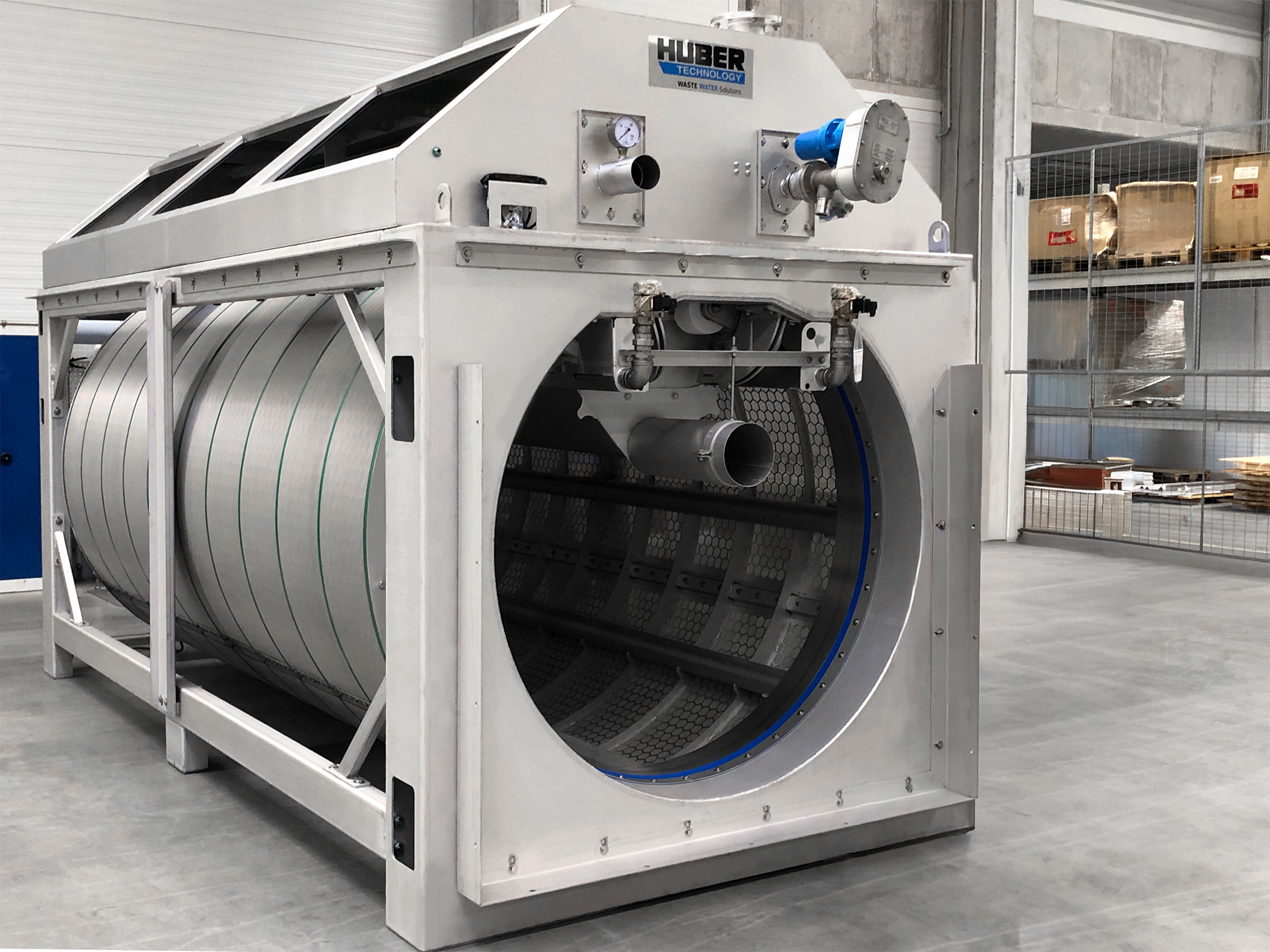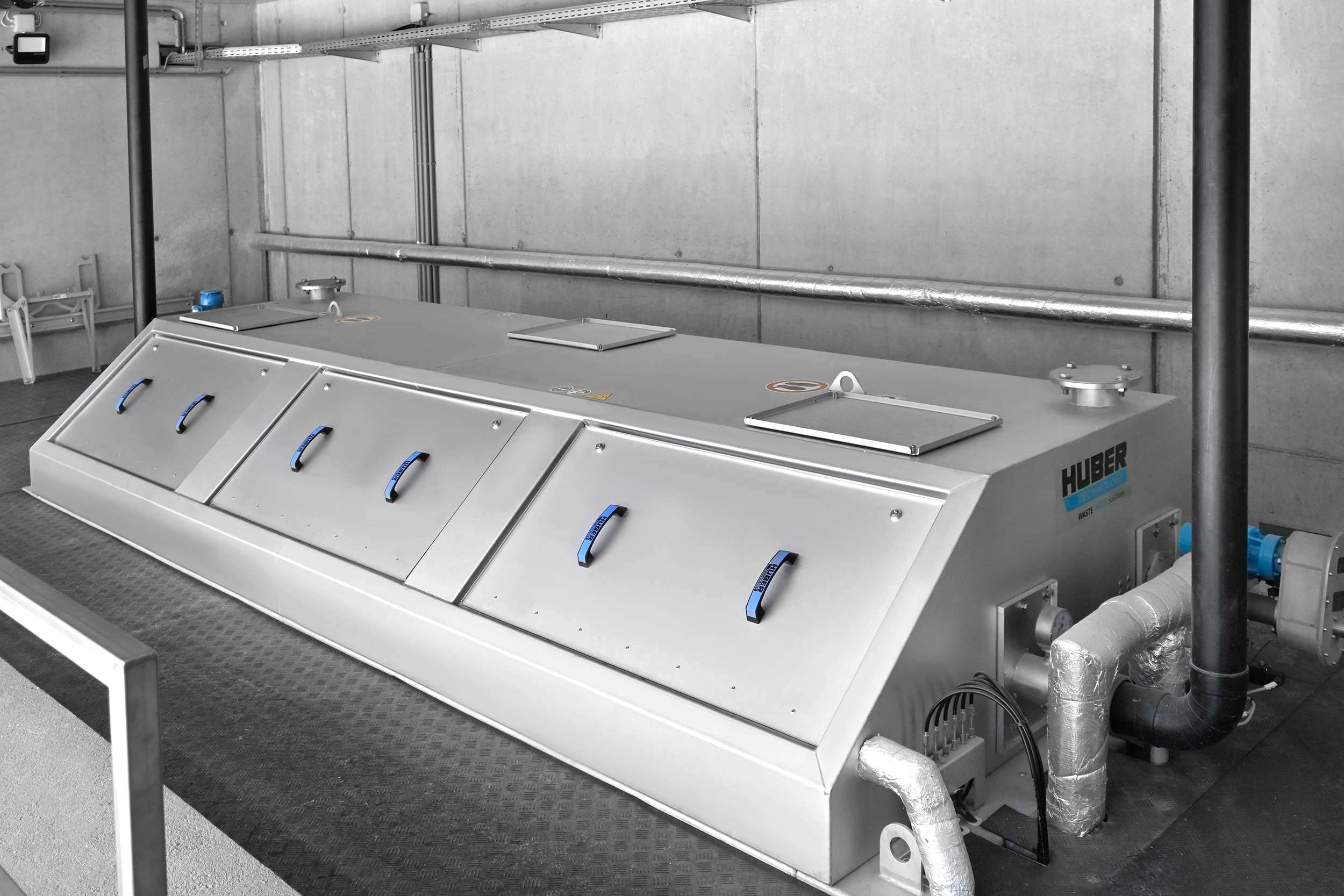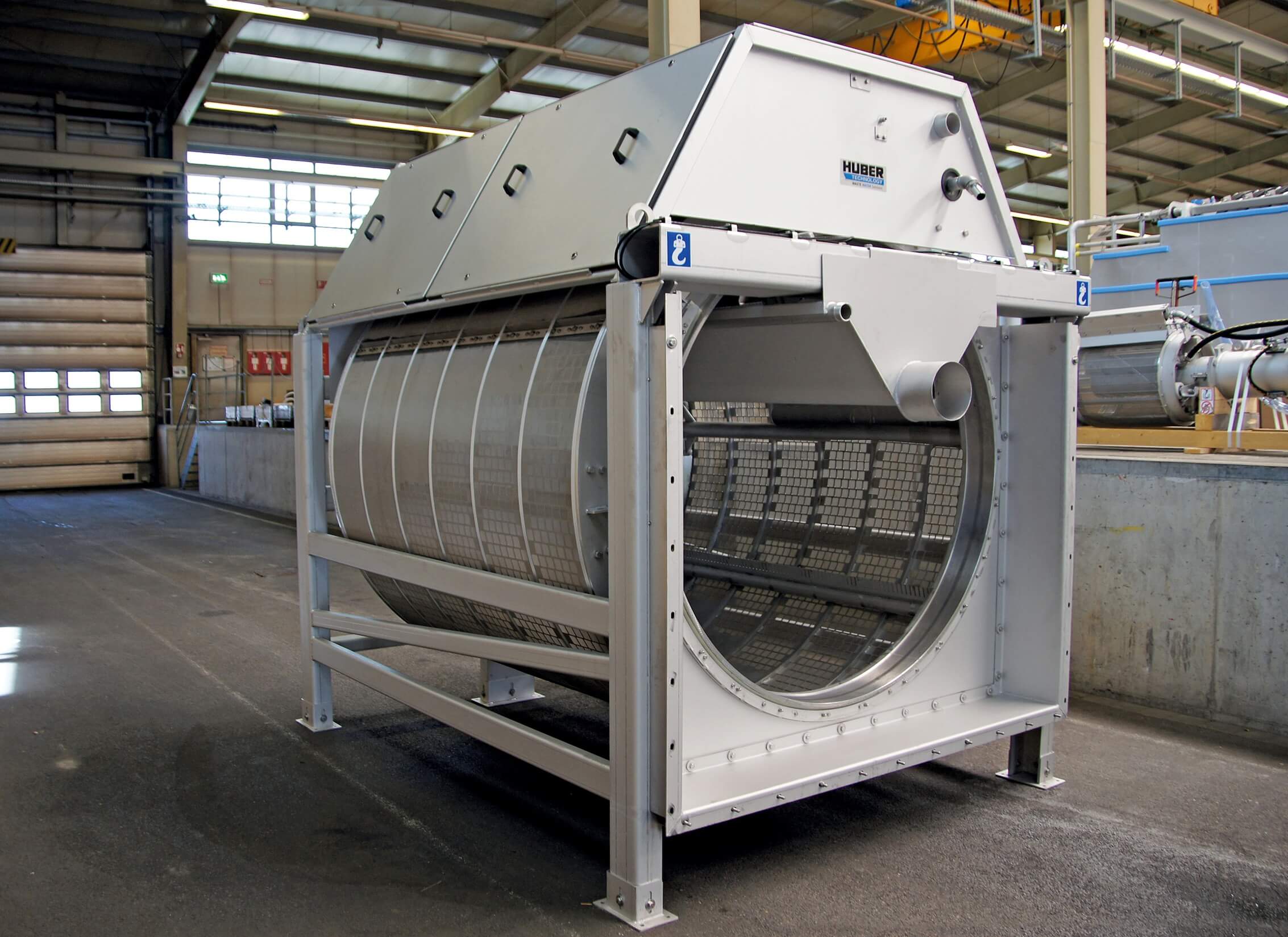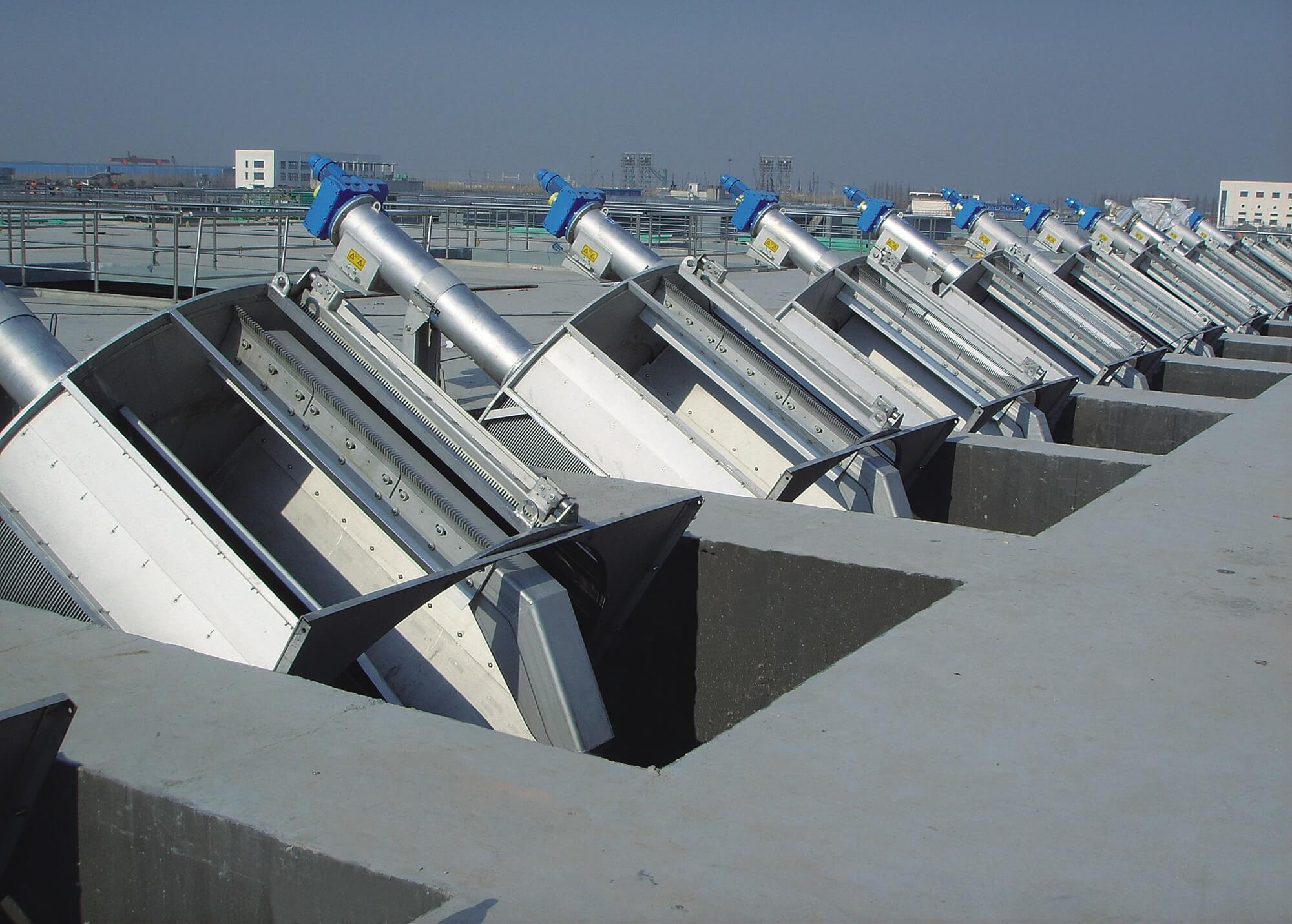

HUBER Drum Screen LIQUID: fine screen for primary treatment as used at the Saalbach WWTP


Fine screening systems are an interesting alternative to primary settling tanks when it comes to changing the sludge stabilisation process from aerobic to anaerobic. Compared with a traditional primary clarifier with a retention time of 0.5 to 2 hours, a fine screen achieves the same or better reduction rates, which take effect within a few minutes whilst requiring only a fraction of the space and volume.
Energy savings and biogas yield through carbon removal
Switching from aerobic to anaerobic sludge stabilisation can reduce aeration costs by around 20–25%. This reduction is achieved through carbon removal, usually through a primary clarifier or, as in the case of Saalbach, using HUBER fine-screen technology prior to biological treatment. This has also resulted in a further positive effect in terms of energy generation through the utilisation of primary sludge, which is used directly for the production of biogas or to increase on-site electricity generation.
Seasonal utilisation of the Saalbach sewage treatment plant
The municipality of Saalbach, known as a winter sports destination but also enjoying high visitor numbers during the summer, operates a sewage treatment plant at Glemmtaler Landesstraße 554 with a design capacity of 49,000 population equivalents (PE). Due to seasonal fluctuations, its actual utilisation varies between 10 per cent during the off-peak periods and 100 per cent during the peak season.
Capacity limits and lack of primary treatment
The Saalbach wastewater treatment plant already had two digestion tanks and a combined heat and power (CHP) unit, but no primary treatment. The digestion process had been fed exclusively with mechanically thickened excess sludge. With increasing tourism, particularly during the winter season, the plant approached its authorised capacity of 49,000 PE60 on some days. It was therefore necessary to find a solution to relieve the load on the biological treatment process.
Plant expansion to relieve the load on the biological treatment process
The first studies for the expansion were carried out in mid-2019. The aim was to relieve the biological treatment process through primary treatment, whilst simultaneously improving the energy balance through biogas production and electricity generation and reducing the energy required for aeration.
Lack of space and integration of the mechanical primary treatment
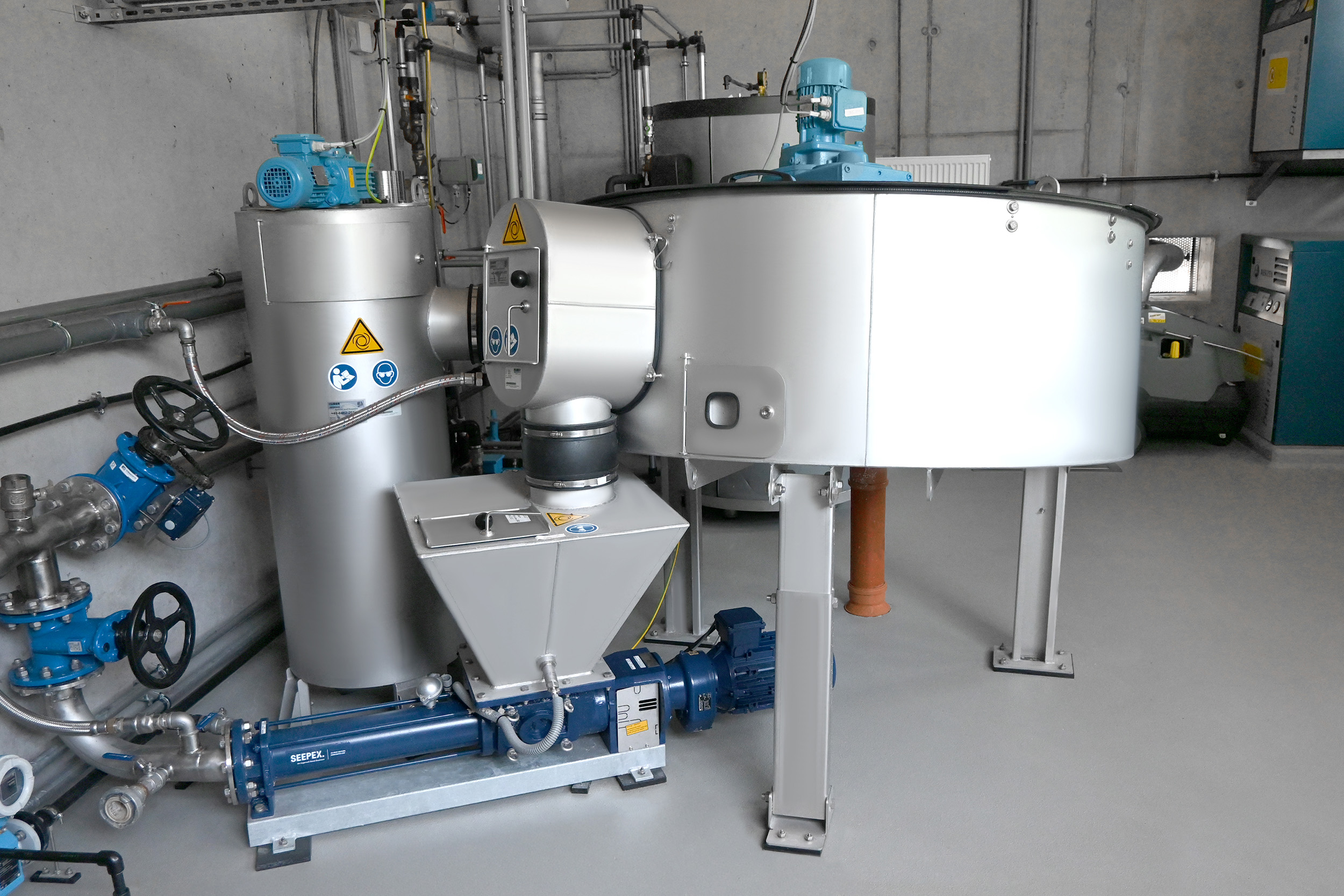
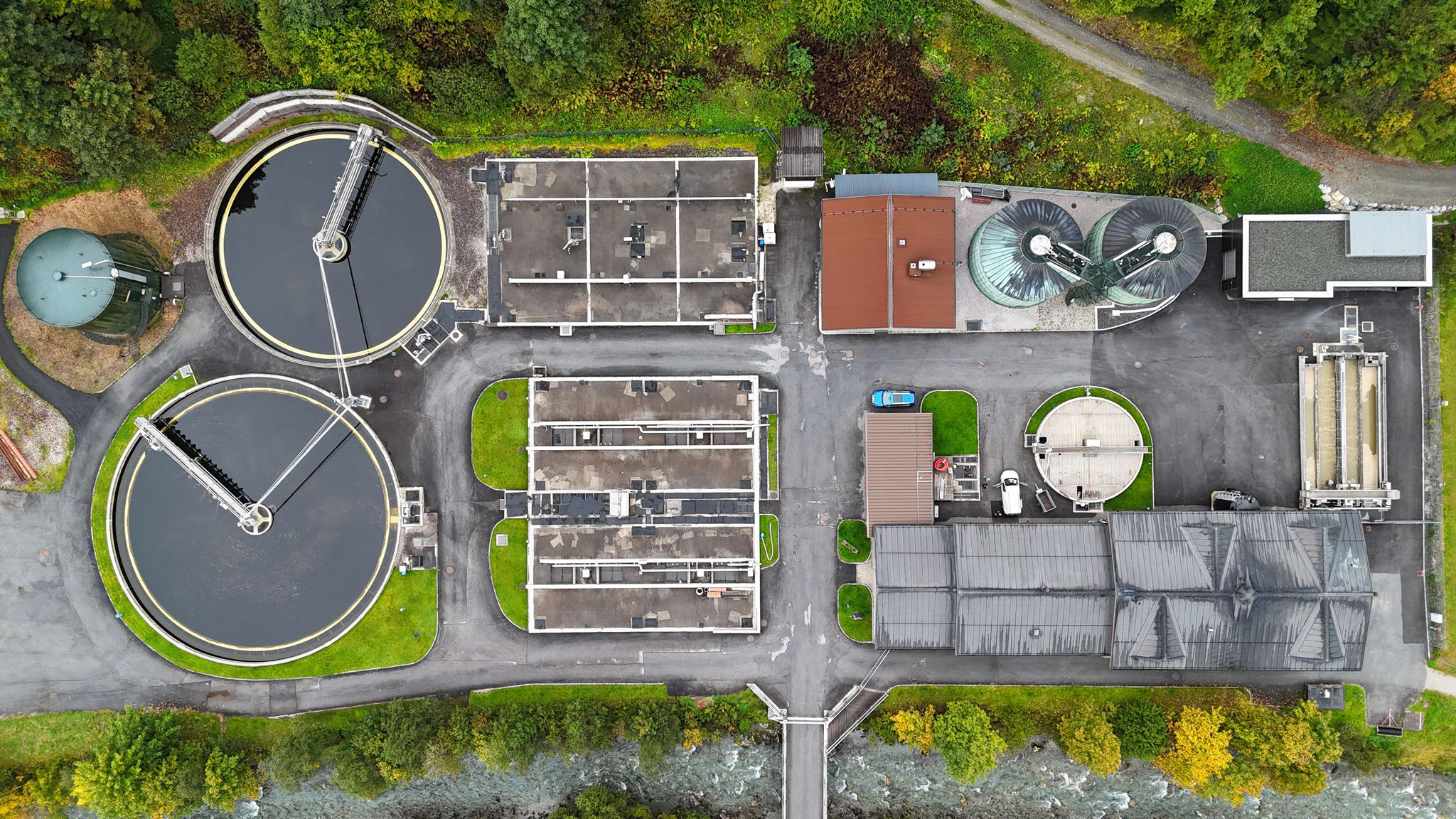
The aerial view shows that, nestled between the northern slope, the Glemmtal main road, the Saalach river and the southern slope, there was no space for a primary treatment tank. The plot on the western side was not available. The sketch outlined in red shows where the lifting station, the mechanical primary treatment (drum screen) and a primary sludge thickener (disc thickener) could be integrated into a confined space after the grit chamber and before the aeration stage, and in the immediate vicinity of the digestion tanks.
Initial trial operation under winter conditions
From mid-February 2020 to mid-March 2020, during the winter season and in freezing temperatures, the first operational trial was carried out using a demonstration unit of the HUBER Drum Screen LIQUID housed in a container with a 0.2 mm mesh.
Optimisation of screen surface cleaning for grease-laden sludge
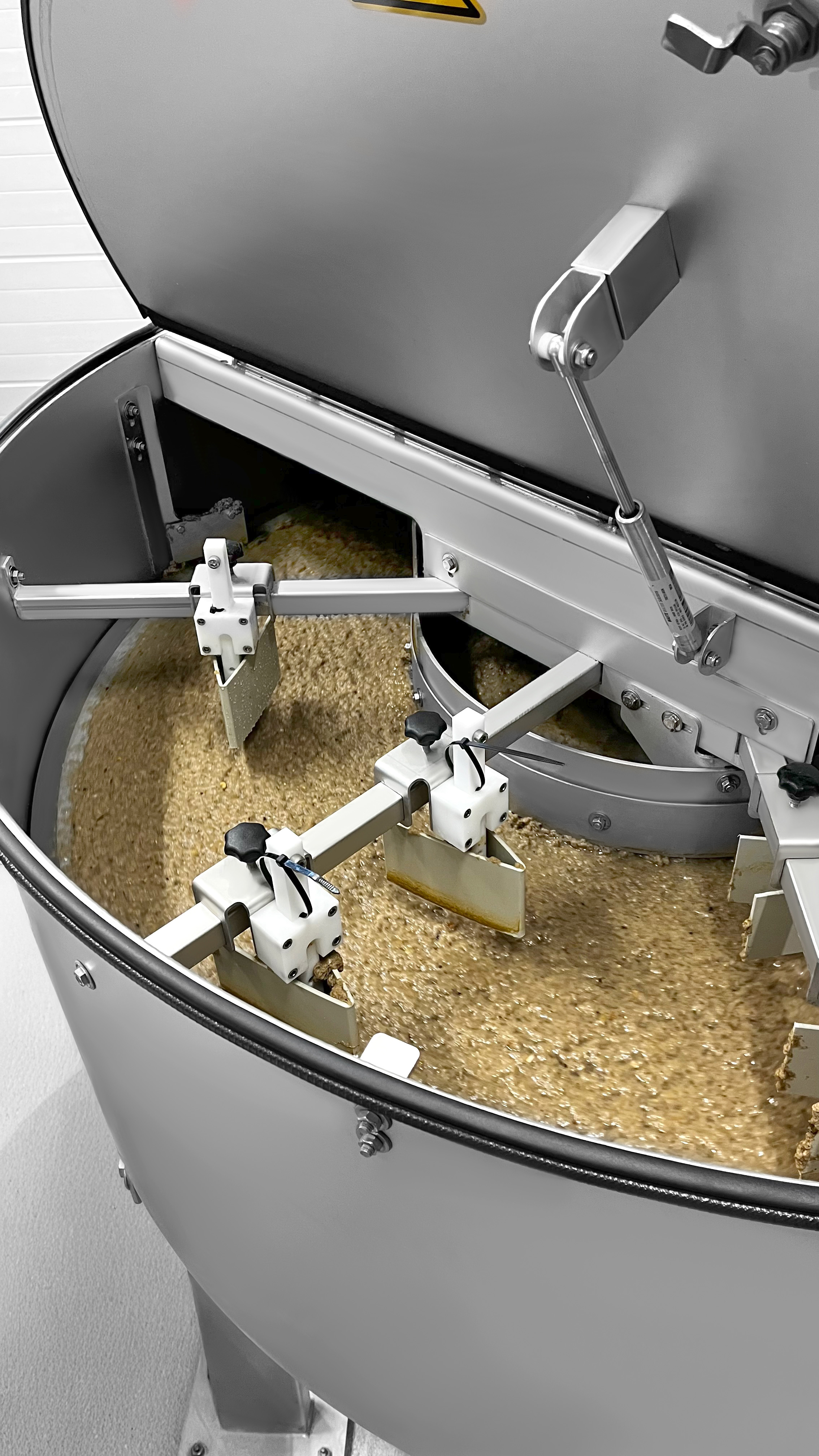
Although the first trial run had to be cut short after a short time due to the coronavirus pandemic, it was already apparent that screen surface cleaning was, and remains, the key criterion; this is why the LIQUID screen was fitted with additional air-jet cleaning and a modified high-pressure cleaning system, enabling it to function reliably even with very grease-laden primary sludge. Thanks to the air-jet cleaning system, the drum screen produced a thicker primary sludge than was the case with spray-water screen surface cleaning, which is fed from the finely screened inlet.
Second trial run confirms high COD reduction
The second trial run took place between December 2021 and March 2022. This demonstrated that COD removal rates of 25–40 per cent (with and without the use of polymers) could be achieved, thereby reducing the load on the subsequent biological treatment stage through the removal of pollutants from the wastewater.
Implementation and commissioning ahead of the 2025 World Ski Championships
Following the local council’s decision and the granting of a water law permit by the Salzburg Provincial Government, construction of the primary treatment plant, including its integration into the existing system, began in late summer 2024, half a year before the 2025 World Ski Championships. Commissioning took place on 27 January 2025. At the end of the 2025 winter season, the primary treatment system was taken out of service until it was put back into operation during the 2025 summer season, from early June to late September.
Operational results during seasonal operation
Depending on the proportion of wastewater routed through the primary treatment system, the operational results showed a COD reduction of 26 to 33 per cent (daily composite sample) prior to entry into the biological treatment stage, in both winter and summer operation. It should be noted that this was achieved without the use of polymers.
Flexible feeding and control of the C/N ratio
Plant manager Josef Ebner and his colleagues are particularly impressed by the flexibility and ease of maintenance of the process: The mechanical primary treatment system is fed on a case-by-case basis and with variable flow rates from a load of around 15,000 p.e. It can be brought into operation within a few minutes. The C/N ratio for denitrification is adjusted to the required value by controlling the volume of influent withdrawn after the grit chamber and passed through the fine screen.
Positive effects on energy consumption and electricity generation
During peak load periods, the measure implemented leads to a significant reduction in the aeration energy required in the aeration tanks and, at the same time, to an increase in biogas yield, which in turn results in higher in-house electricity generation.
Image Gallery