
HUBER Cold Air Dryer HPS® Efficient and simple sludge drying


Sewage sludge drying using a heat pump – an environmentally friendly and cost-effective solution for municipal and industrial wastewater treatment
The compact containerised solution
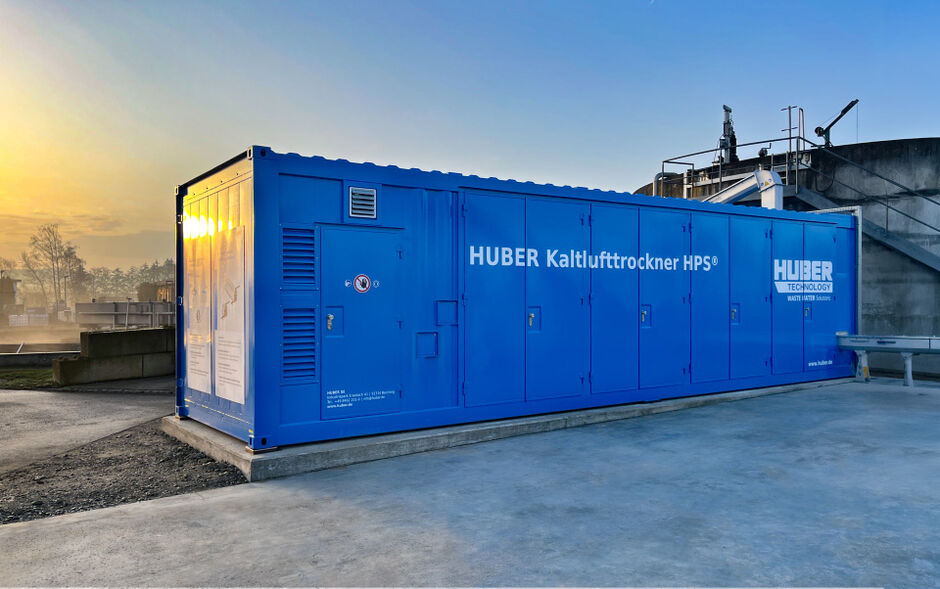
The HUBER Cold Air Dryer HPS® has been developed to efficiently, safely and cost-effectively dry sewage sludge, all within a ready-to-operate, modular containerised design.
Who is the sludge dryer for?
- Specifically for small to medium-sized sewage treatment plants (10,000 to 50,000 p.e.)
- If there is no source of waste heat for drying but surplus electricity is available, for example from a solar PV system, the HUBER Cold Air Dryer HPS® really comes into its own.
- Due to the amendment of the Waste Sewage Sludge Ordinance (AbfKlärV), disposal costs for sewage sludge are set to rise in the foreseeable future.
- Drying reduces the volume and mass of sludge whilst simultaneously creating a high-calorific fuel for mono- or co-incineration. This makes an immense contribution to CO2 reduction.
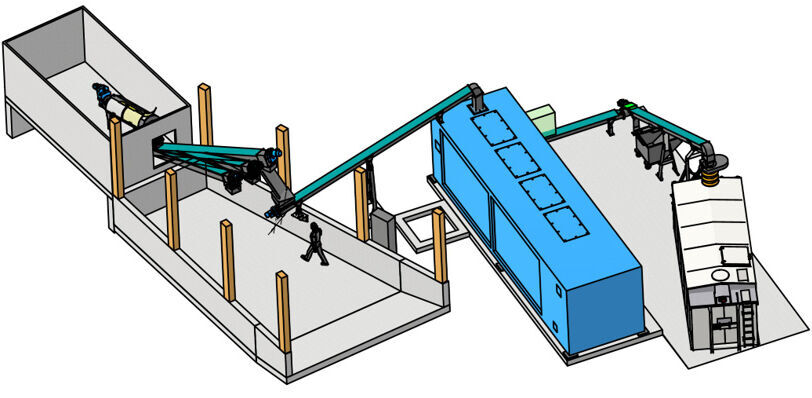
- Compact design in combination with the HUBER Screw Press Q-PRESS®
- Minimal space requirements for maximum cost savings on sewage sludge disposal
- Integration of sewage sludge dewatering, surplus energy and sewage sludge drying operations
Design of the HUBER Cold Air Dryer HPS®
The compact containerised solution
The HUBER Cold Air Dryer HPS® has been developed to efficiently, safely and cost-effectively dry sewage sludge, all within a ready-to-operate, modular containerised design.
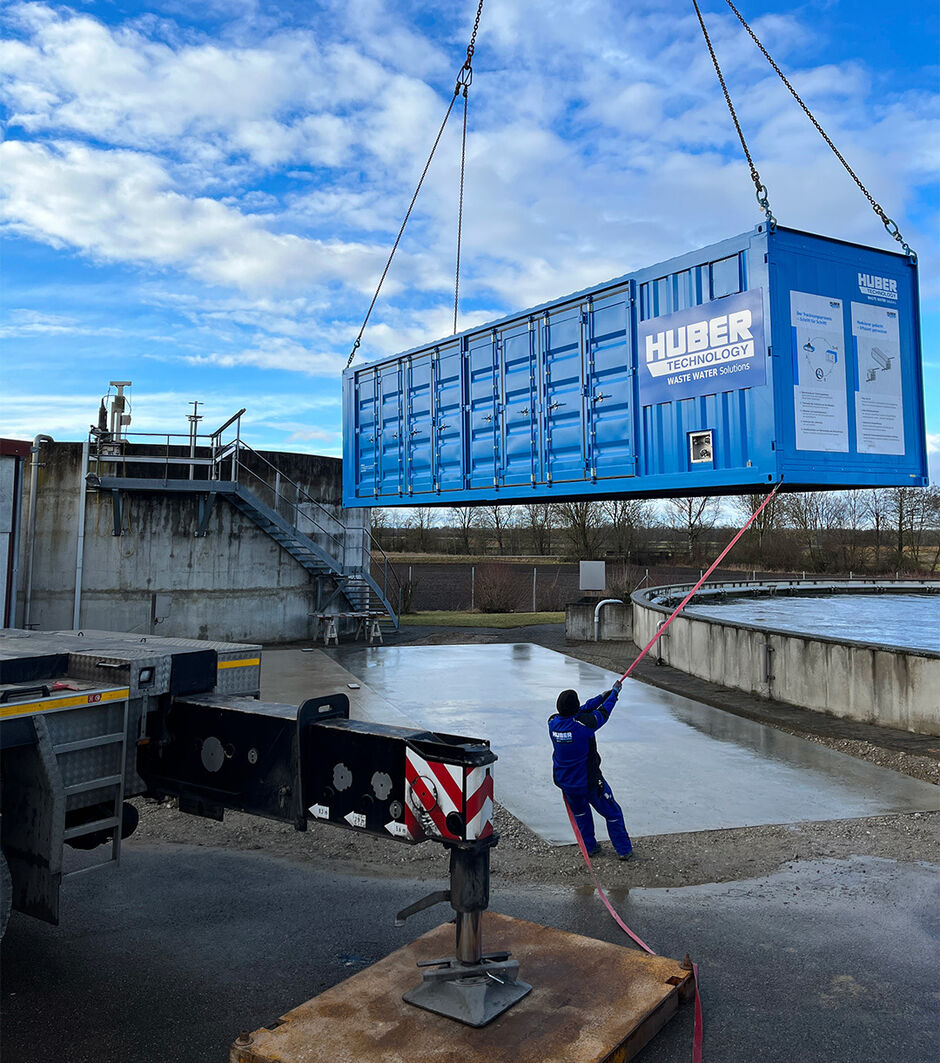
No additional structure is required! The HUBER Cold Air Dryer HPS® can be delivered fully assembled in a container.
- No construction time
- No need for planning permission for a new building
- Minimal foundation requirements
- Quick to install at almost any location
In buildings, the dryer can be installed with or without a container.
Few interfaces ‒ plug and dry
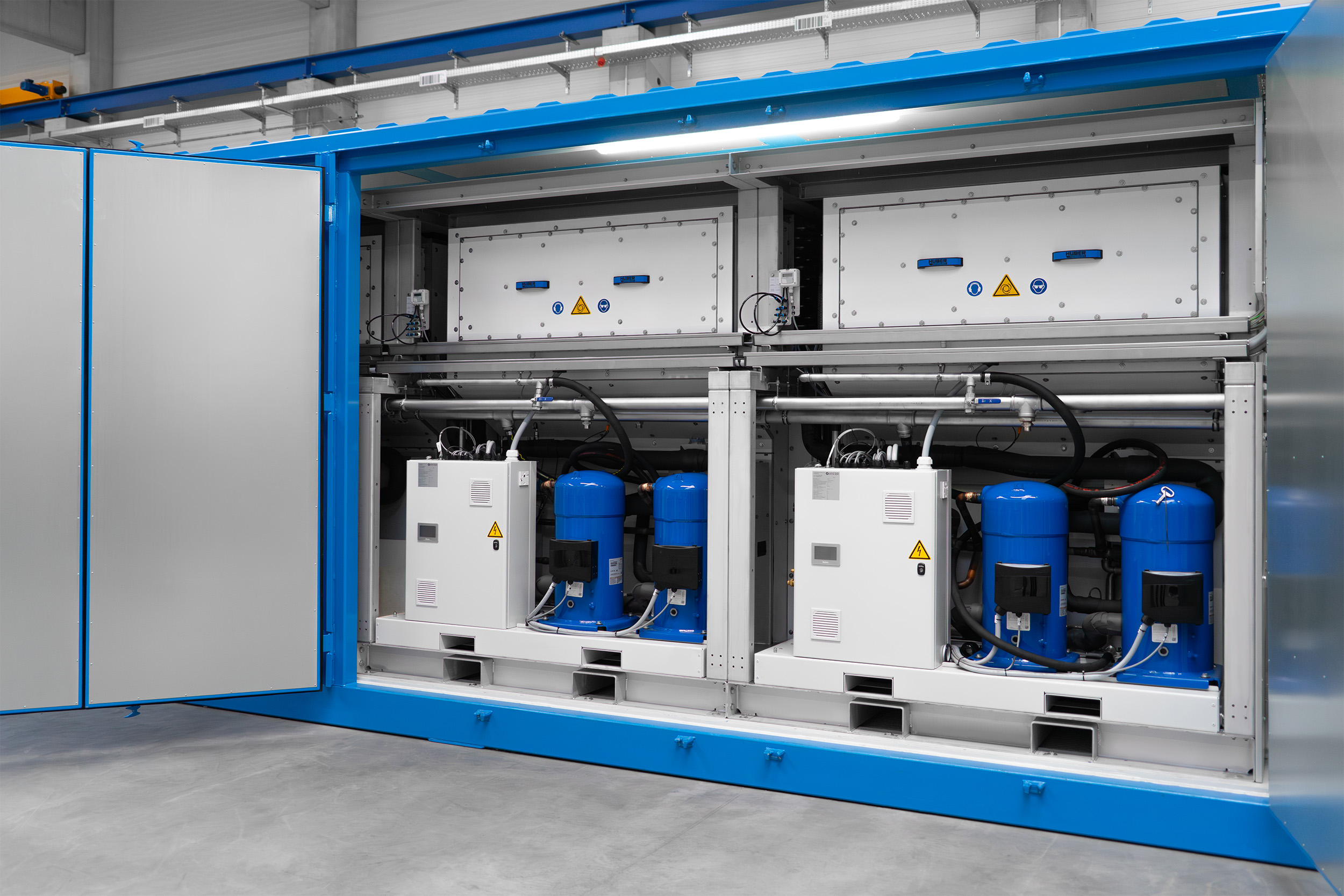
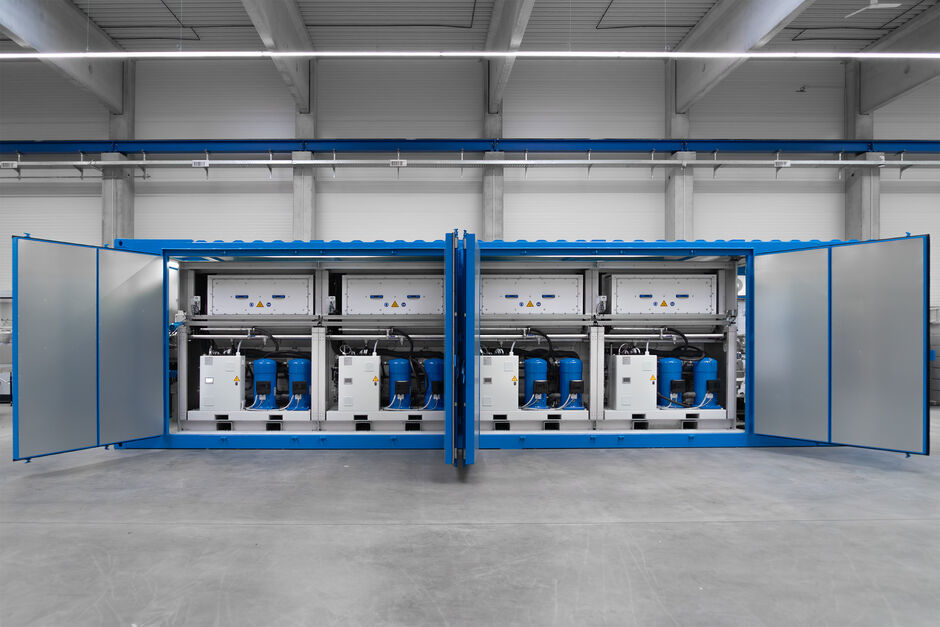
The container contains all the necessary components:
- Drying chamber
- Fans
- Heat pump
- Control cabinet with control technology
All that remains to be connected is:
- Electrical power supply
- Sludge supply
- Dry sludge removal
- Condensate removal
- Cooling water
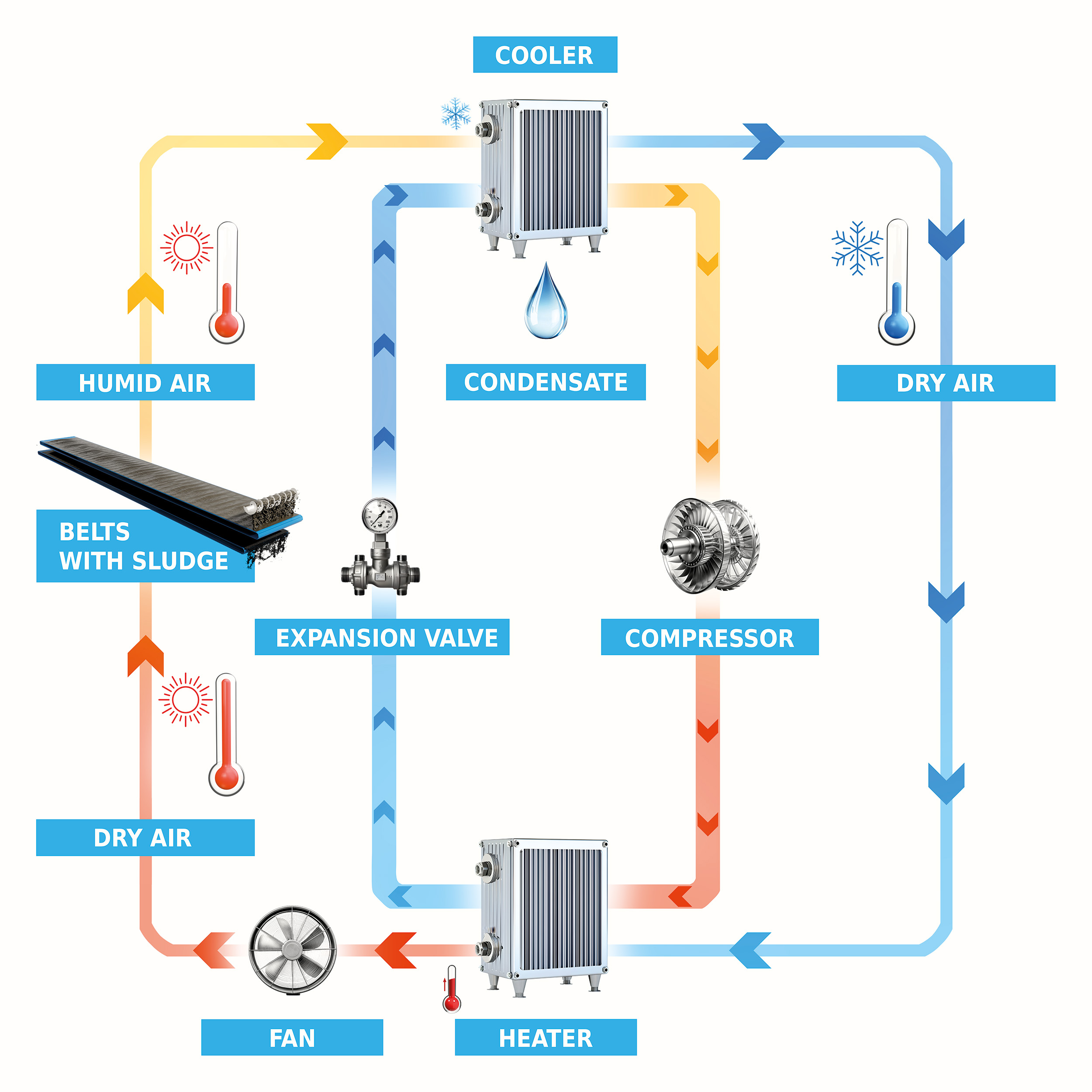
How does sludge drying with a heat pump work?
The process runs continuously in a closed loop.
Evaporator:
Moist air from the dryer flows over the heat exchanger, causing the refrigerant to evaporate.
Compressor:
The refrigerant is compressed, causing the pressure and temperature to rise.
Condenser:
Here, energy is released again, heating the process air for drying.
Expansion valve:
The refrigerant expands via the valve and is regulated to a constant, defined superheat after the evaporator.
The drying process ‒ step by step
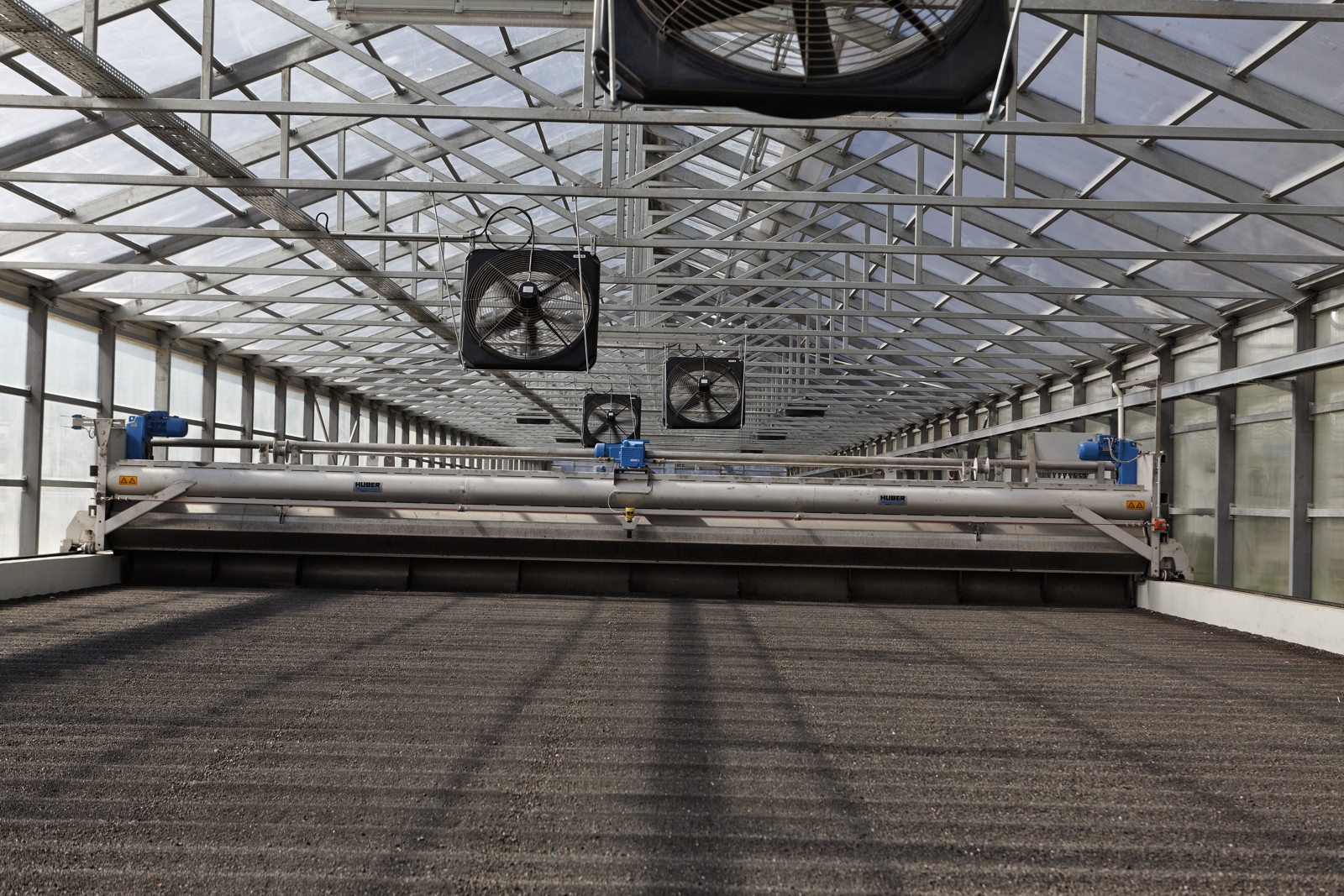
- The sludge is fed onto the drying belts. The sewage sludge is evenly applied to perforated conveyor belts.
- The sludge dries on the belts. Water evaporates by convection.
- Cooling and condensation. The moist air is condensed by passing through heat exchangers.
- The air flow is heated. The air is heated by the liquefaction of the refrigerant.
- A recirculation fan compensates for pressure loss. Warm, dry air is directed to the belts.
Media
Videos and Animations
Downloads