
Grease traps in factory-built grit chambers


Every wastewater regulation specifies a limit value for ‘lipophilic substances’, which in practice are referred to as grease. As a rule, more than 90 per cent of the total grease concentration is often present as dispersed grease particles and emulsified grease. Conventional grit and grease traps at sewage treatment works can only retain non-dispersed, floatable grease (DWA M760). The remaining dispersed substances are separated in the biological treatment section of the sewage treatment works.
Various grit chamber solutions
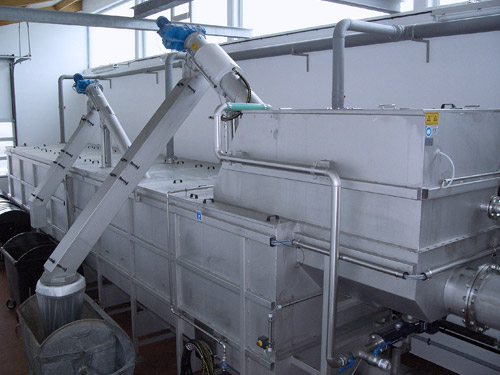
Factory-built grit chambers are often combined with grease traps (floating-material separators) (DIN 19569-13). According to DWA, factory-built and cast-in-situ aerated long grit chambers – i.e. grit channels with a specific length-to-width ratio – can be supplemented with a grease trap (grease trap pocket) by means of a slotted partition wall. The HUBER Complete Plant ROTAMAT® Ro5 has been manufactured for over 30 years using state-of-the-art technology with a separate grease trap, as shown in Figure 1. Factory-built, manufacturer-specific grit chambers do not usually have a separate grease trap pocket, but instead separate the floating matter by means of a submerged baffle at the outlet of the grit chamber.
Effective grease separation requires large, calm surfaces to ensure that the floating matter accumulated on the liquid surface is not resuspended. In the case of aerated DWA grit channels with a side-mounted grease trap, the non-dispersed, floatable fats are transferred into the grease trap by the resulting laminar flow and remain there until removal. Factory-manufactured, customised grit chambers which operate without a grease collection trap despite being aerated can only retain non-dispersed, floatable fats to a limited extent due to the very turbulent surface. One exception is the HUBER Complete Plant Hydro Duct ROTAMAT® Ro5 HD system, as this machine features a non-aerated section with a calm surface.
Removal and disposal of floating matter
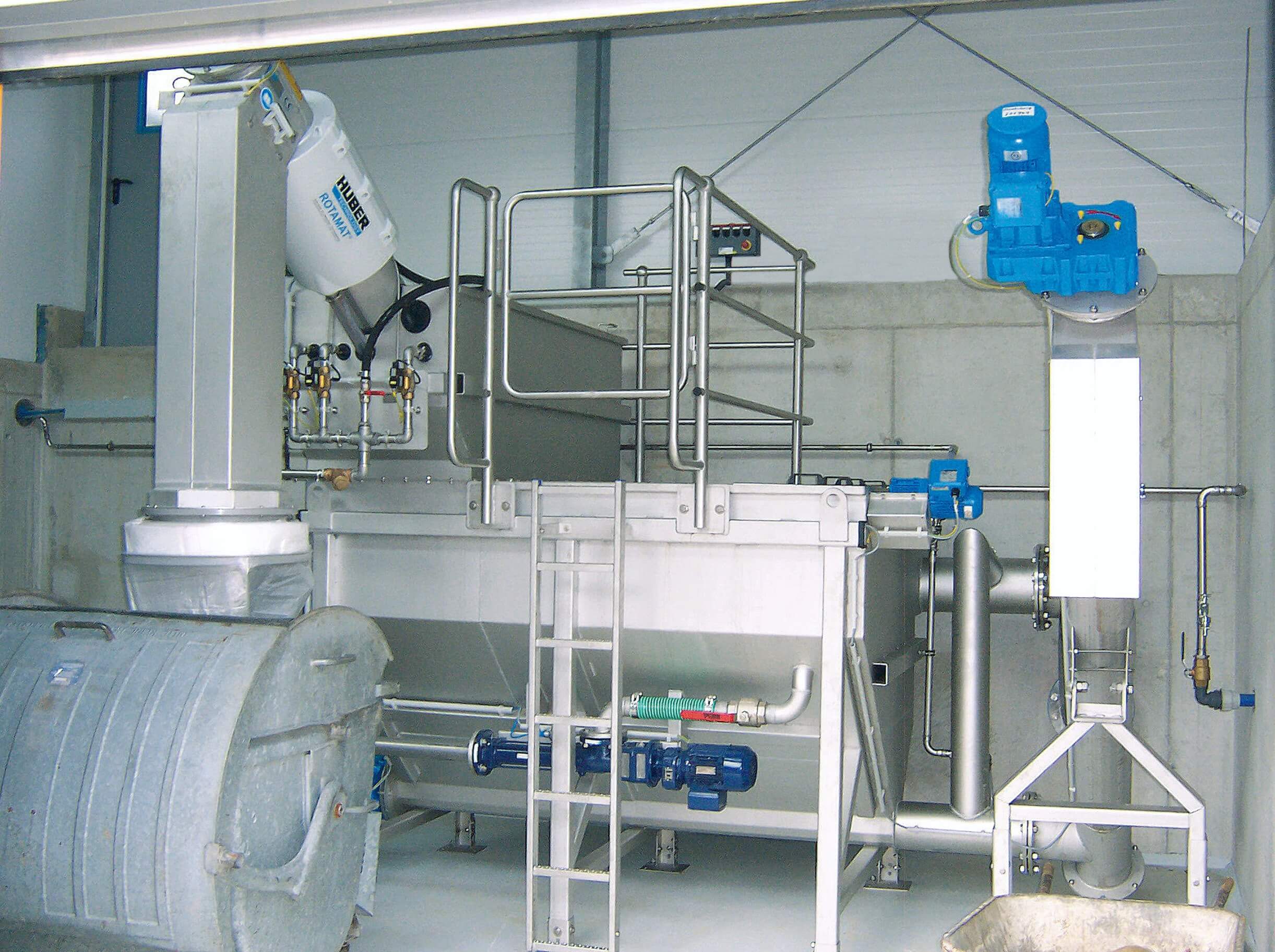
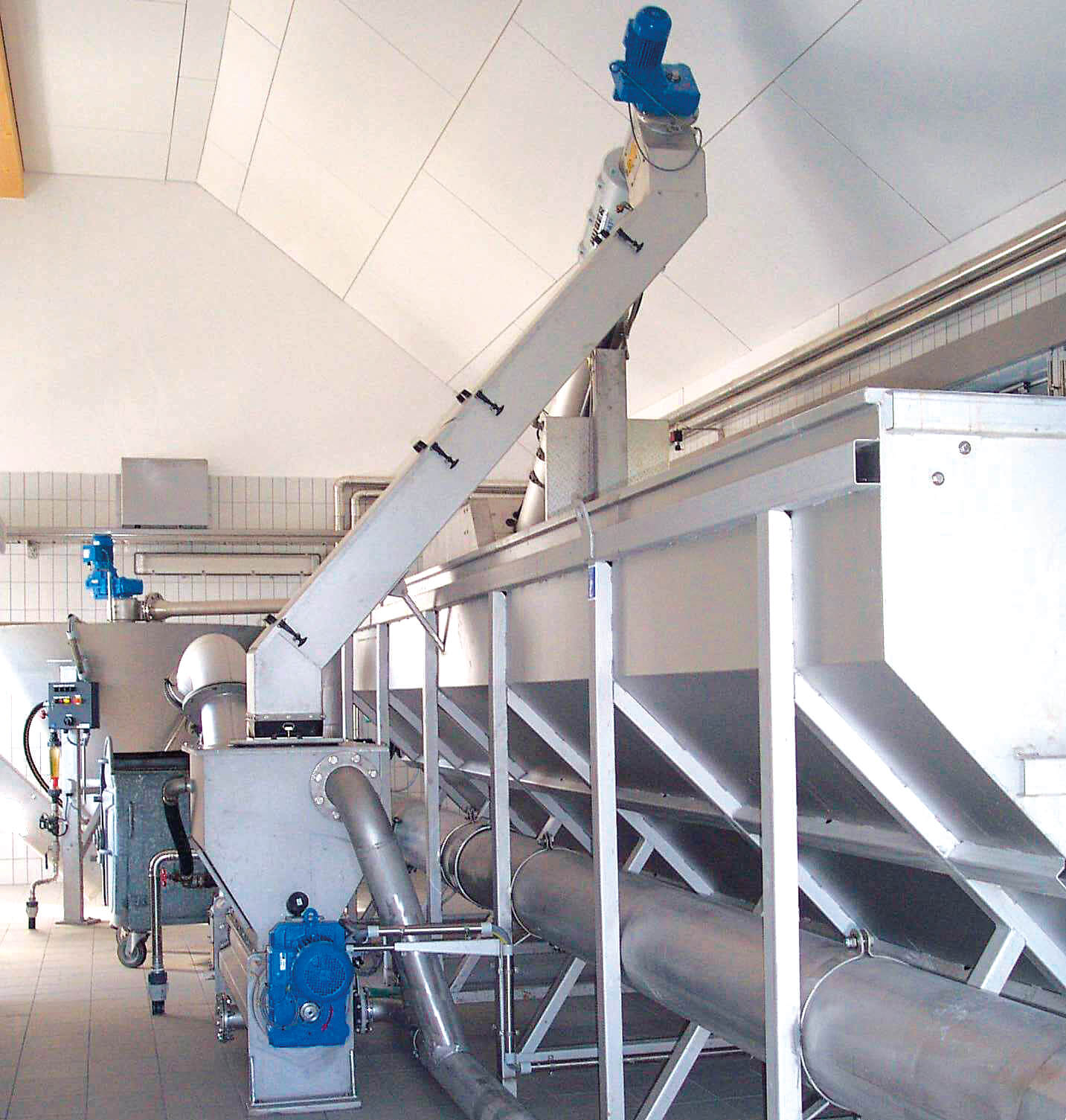
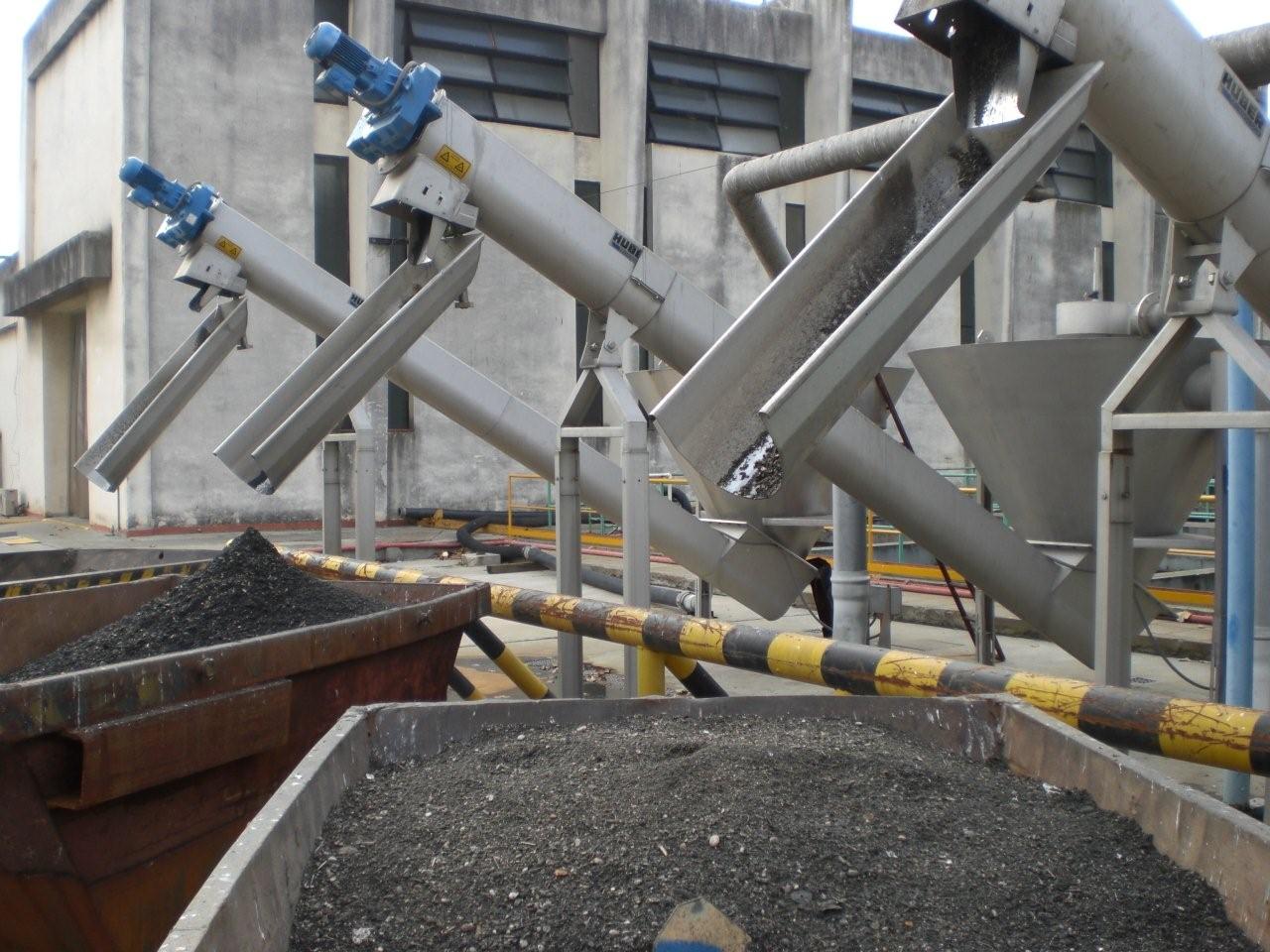
The removal and disposal of retained floating matter are handled in different ways. HUBER grit chambers use automatically operated paddle scrapers without exception (see Figure 2). The accumulated floating matter is pushed along the grease trap pocket or a baffle wall and, at the end, is discharged into a grease collection shaft via an inclined ramp (see Figure 3), having been partially dewatered. A level-controlled screw pump conveys the moist solids, where possible, into a raw sludge shaft (digestion) or into a separate container.
Other systems attempt to remove the accumulated floating matter using fixed, height-adjustable pumping equipment, or flush the floating matter into a channel using a large volume of wastewater by raising the water level. In both cases, solid–liquid separation must take place in an external, additional unit to avoid problems in the digester or during disposal by third parties. As a general rule, returning the grease–water mixture to the wastewater stream (upstream of the screen) or feeding it into a wash press should be avoided.