Huber worldwide

Select your Region and Language
Worldwide
Worldwide
Europe
Germany
France
Spain
Sweden
Finland
Norway
Russia
Poland
Hungary
Australia
Australia
South and Central America
Mexico
Chile
Peru
Asia and Middle East
Turkey
North America
Canada

History

The Huber Technology Foundation was established in 2006 on the initiative of Hans Georg Huber. That was the year in which the then Chairman of the Executive Board of HUBER SE was awarded the prestigious ‘German Environmental Prize’. For him with his boundless enthusiasm for engineering profession, it was only natural to contribute the prize money to a foundation.

From the very beginning, the Foundation’s clear objective has been to promote awareness of water – an often scarce resource – amongst young engineers worldwide, whilst also raising public awareness. In addition, the Foundation has awarded the ‘Huber Technology Prize’ every two years, with the aim of promoting the search for energy-efficient, simple and affordable solutions for water treatment and decentralised supply systems.


Read about the history and development of the Foundation in the following chronological overview:

I - Support within the region

The partnership continued with shepherd Anton Breindl, whose animals were grazing the meadows in Hans-Huber Nature Park for the fifth year, and with organic farmer Stefan Rupp, who mows the meadow; Günter Deß of Huber SE once again undertook the pruning of trees and shrubs. 

In September 2025, the Foundation entered into a new partnership with Jagdverein Berching – Dietfurt e.V., guided by the principle ‘Forests, water, children – experiences in nature for a sustainable future’. Under the leadership of Susanne Brom, children and young people gain practical, nature-based knowledge about the environment, water and the natural water cycle, vegetation and forests, and native wildlife and its conservation. This educational work is closely linked, among other things, to the Bavarian Ministry of Education’s ‘Schule fürs Leben’ (‘School for Life’) project, in which hunters volunteer to deliver lessons in schools and take classes into their hunting grounds to raise and encourage environmental awareness. The Huber Technology Foundation is therefore pleased to be able to make a valuable contribution to environmental education here. 

The partnership with Fischereiverein Neumarkt e.V. continued through support for both ongoing projects and new ideas, including its particularly dedicated and widely welcomed work with children and young people on water, wastewater and sustainability. The youth group, with around 45 members aged ten to 18, meets regularly to learn how to treat nature responsibly. The young anglers undertake a wide range of tasks: they maintain the hatchery boxes installed in the Pilsach, observe the development of brown trout from eggs to juvenile fish, regularly measure water quality and take samples to detect changes at an early stage. They also monitor fish stocks, check the condition of the banks and learn how ecological relationships in aquatic environments work. Preparing for the state fishing examination and the annual clean-up day to remove litter from their area are also among the group’s main activities. e. 

II - Support outside Europe

In October, the Huber Technology Foundation began cooperating with the non-profit association ‘K10 Afrika’ by supporting an education and development project designed to encourage the conscious and economical use of water in rural Malawi, particularly during the dry seasons characterised by water shortages, which last up to eight months a year. The initiative came from Heinz Stengel of Neumarkt. Specifically, the project involves introducing waterless composting toilets in the participating villages and providing training in drip irrigation for fruit and vegetable cultivation. 
Shepherd Anton Breindl and his flock continued to graze Hans Huber Nature Park, where organic farmer Stefan Rupp mowed the meadow and – as a new addition – Günter Deß, an employee of HUBER SE, took on the pruning of shrubs and trees. The walnut tree planting initiative planned the previous year was completed in April. A meeting also took place at Neumarkt District Council to establish an ecological reserve for sand lizards within the park, a project which, owing to various difficulties, will not be completed until 2026.

The bee project on the HUBER SE premises continued to attract support and interest: the participating beekeepers invited colleagues and regularly organised tours and information sessions to provide an insight into the fascinating life of bee colonies and their queen.

The Landschaftspflegeverband Neumarkt received support for a special project in the Deusmauer Moor nature reserve: to create habitats and breeding sites for the yellow-bellied toad, which is highly endangered in Bavaria, seven necessary depressions were excavated in an area of fallow land in the autumn.

The Foundation was able to support three environmental and social sustainability initiatives undertaken by Fischereiverein Neumarkt e.V., Bavaria’s largest angling association, which manages around 164 hectares of fishable waters, including the Weiße Laaber and Schwarze Laaber rivers and former gravel pit lakes. Firstly, as part of river restoration measures, boulders were placed in the Schwarze Laaber to diversify the flow and improve the river’s ecology, creating a healthy habitat for many organisms. Secondly, as fish species such as brown trout are declining in these waters, hatchery boxes were provided to offer fish safe and suitable opportunities to lay their eggs. Thirdly, water testing materials were intended to stimulate and foster young people’s interest and enthusiasm for the environment, especially aquatic habitats.

At Wasserwacht Berching, whose many responsibilities include water, nature and environmental conservation (GNU), Claudia Hacker and Carina Wittmann wished to pass on the knowledge they had acquired as patrol leaders in the GNU specialist service to children and young people in the Berching water rescue organisation. The necessary materials could be purchased with the help of the donation.

Hans Huber Nature Park and landscape conservation

As in the previous two years, shepherd Anton Breindl and organic farmer Stefan Rupp continued to manage the nature park this year. 

Given the difficult conditions in the nature park, namely the prolonged dry spells recurring since 2018, it was decided, with support from Neumarkt i.d. OPf. District Council, to replace the fruit trees that had died with walnut trees said to be more resilient to the climate. The trees were planted in early 2024.

The number of active beekeepers on the HUBER SE premises increased. For its part, the Foundation procured equipment and information materials to support the beekeepers’ work and spread knowledge about bees more generally. 

Once again this year, a donation supported the further development of the energy education trail in Lauterhofen and made it more attractive. 

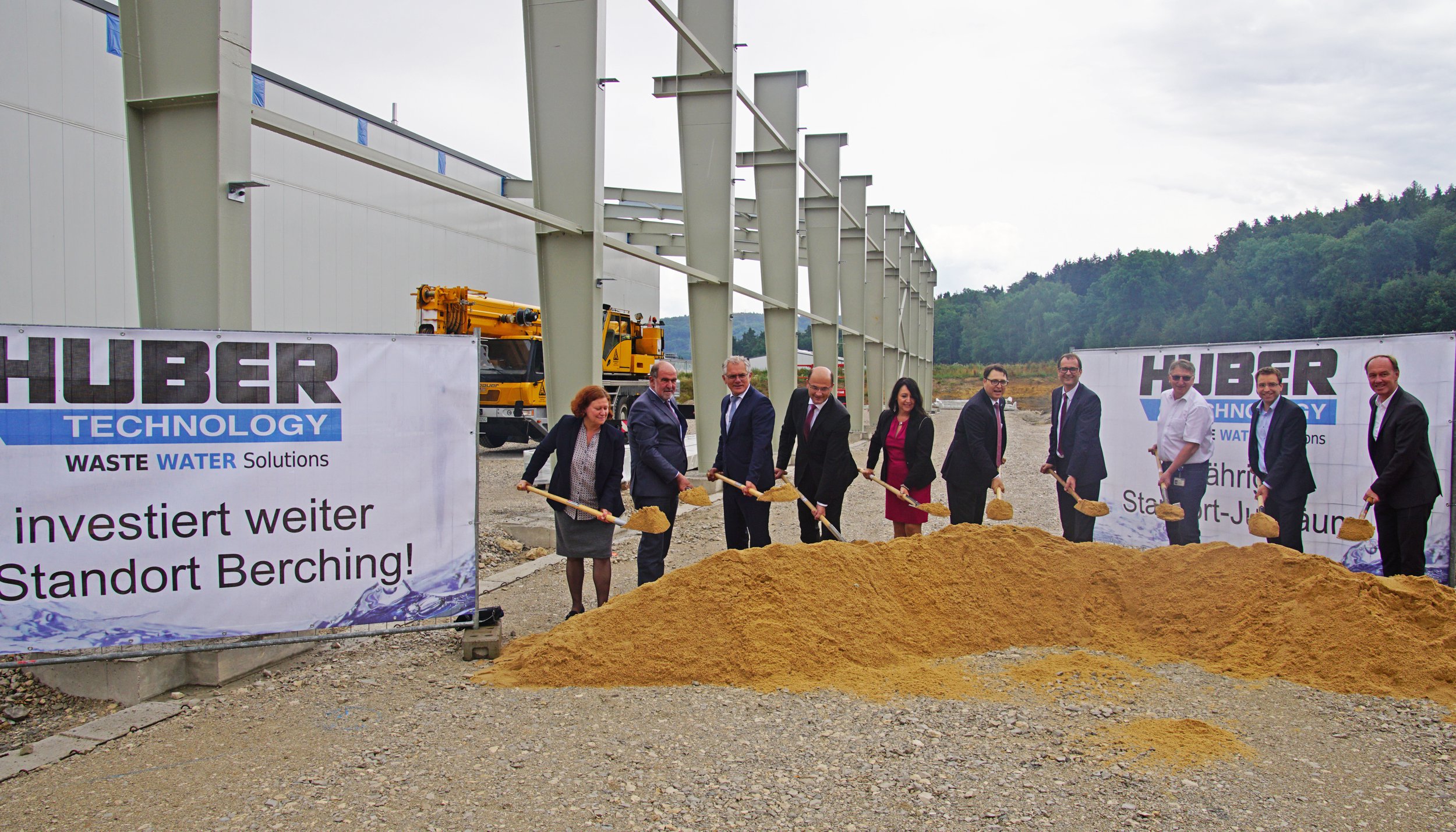
18-07-spatenstich-produktion-berching-01
Vestibulum ante ipsum primis in faucibus orci luctus et ultrices posuere cubilia Curae

As in the previous year, the Foundation’s activities were restricted to its immediate surroundings owing to the coronavirus pandemic. 

Hans Huber Nature Park and landscape conservation

The partnership begun the previous year with shepherd Anton Breindl from Rappersdorf, whose animals tend the traditional orchard meadow in the nature park, and organic farmer Stefan Rupp from Erasbach, who mows the meadow, continued. 

The bee project launched the previous year on the HUBER SE premises was enthusiastically received by employees who also keep bees as a hobby; they introduced the first bee colonies in October. 

The Neumarkt landscape conservation association received support to build the ‘Water’ station on the energy education trail at Hallerbrunnen in Lauterhofen, which was officially opened in June 2023. 

The Foundation also supported the implementation of a project by Michael Kienlein, Chair of the Obst- und Gartenbauverein Berching, to create a sensory park beside the historic town wall, with particular emphasis on the element of water. The project was completed with its official opening in December 2025. 

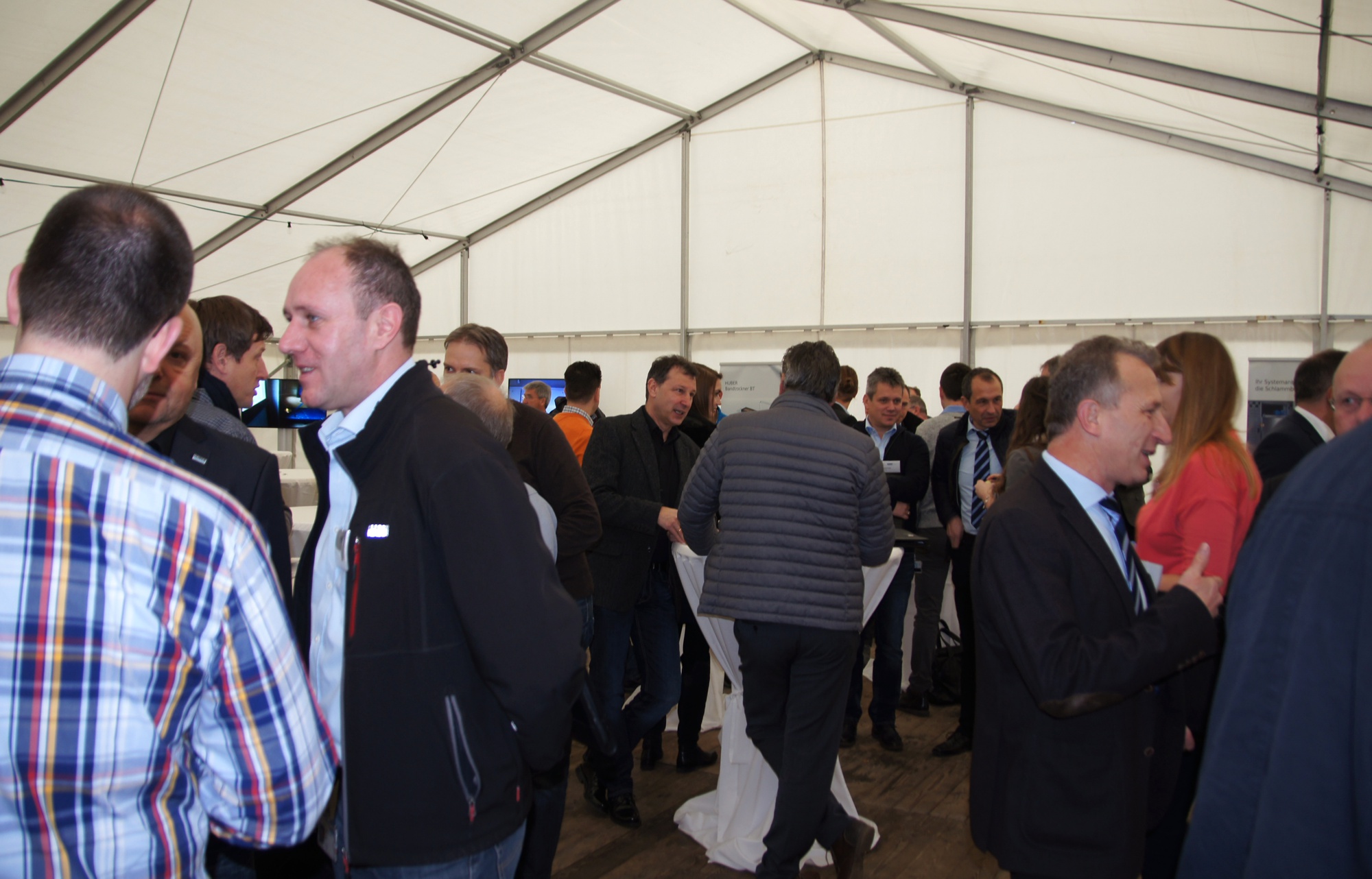
16-11-forum-klaerschlamm-cluster-04-gespraeche
Aenean eget tortor at dolor rhoncus condimentum.

This year, marked by the coronavirus epidemic, also left its mark on the Foundation, as no applications for funding scientific projects were received.

Hans Huber Nature Park

As in the previous year, planting in the park was discussed with the Landschaftspflegeverband Neumarkt. A partnership was also established with shepherd Anton Breindl from Rapperdorf and organic farmer Stefan Rupp from Erasbach, with the sheep grazing the traditional orchard meadow and Stefan Rupp mowing it. 

On the HUBER SE premises, company employees who also keep bees as a hobby built the bee house planned the previous year, following completion of the infrastructure.

I – Science

Christian Böhme of TU Berlin planned and sized a sanitation facility as part of his master’s dissertation in Las Gilces, a village in Ecuador where there is no sanitary wastewater treatment and wastewater seeps away through open pits. The facility was intended for the village’s new cultural and community centre, a bamboo structure whose construction began at the same time and was completed in March 2021. 

The Kompetenzzentrum Wasser Bodensee, which has since become insolvent despite its promising approach, received support for training materials for public outreach and school lessons. Using indicator organisms in a novel apparatus, these materials made it possible to demonstrate and monitor water quality in Lake Constance. 

II – Hans Huber Nature Park and landscape conservation

Building on the cooperation established the previous year with the Landschaftspflegeverband Neumarkt, a consultation took place on the next steps for the nature park. A bee house for several colonies was also planned on the Huber SE premises using locally sourced materials, and the necessary infrastructure was installed on site. 

I – Science

Paul Marbach, a student of ‘Shipbuilding and Maritime Technology’ at Kiel University of Applied Sciences, worked on solutions to prevent plastic pollution of the oceans by intercepting it as it enters through rivers. An automated mechanical cleaning system mounted on a vessel was envisaged for this purpose. Marbach’s project involved calculations to determine how a vessel would need to be designed to carry and manoeuvre such a heavy screening system without losing stability. HUBER SE’s ® Screen was selected and modified as the collection system. 

II – Huber Nature Park and landscape conservation

A long-term partnership was agreed with the Landschaftspflegeverband Neumarkt, providing both advice on park maintenance and support from the Foundation for the association and its activities, with a particular focus on ecological improvements to rivers and streams. 

I – Science and science communication

Lukas Niehoff placed his bachelor’s dissertation in Water Technology at Hochschule Triesdorf within the broader context of the ‘Terra Preta Sanitation’ study already under way in Arba Minch, Ethiopia, by Jan Robert Wibbing and Prof. Dr. Ralph Otterpohl of TU Hamburg Harburg. The study sought to finance sanitation treatment through revenue from the end product, namely compost or soil. In his work, Niehoff pursued the idea of extending the cycle by growing bamboo and antelope grass, which provide building materials, firewood and animal feed, and possibly producing biogas. This was intended both to generate the revenue needed for wastewater collection and treatment and to reduce, at least, deforestation and the associated soil erosion in the surrounding area.    

On World Water Day, 22 March 2018, held under the theme ‘Water for nature’ or ‘Nature-based solutions for water’, the school gardening team at Staatliche Knabenrealschule Neumarkt i. d. OPf., led by teachers Stefanie Thaben and Christiana Meixner, began constructing and installing a tiered pond with a stream in the existing school garden, which was then populated with animals and plants. The Year 6 pupils had already explored the subject of water and presented their results and findings to the Foundation’s two executive board members.

At the ‘St. Marien’ nursery in Berching, a water play area was intended to give children a hands-on experience of water. Thanks to the donation, the work was completed by October.

II – Hans Huber Nature Park

The hot, dry summer that year caused severe and irreparable damage to the trees planted by HUBER SE. Discussions therefore took place with Neumarkt District Council on how to proceed; given the location, another tree planting initiative did not appear sensible.

I – Science

In response to the dramatic fall in groundwater levels in India, students Theresa Magula and Jasmin Wagner developed measures and methods to replenish aquifers and raise public awareness of the problem and the sustainable use of water as part of their bachelor’s dissertations in Environmental Engineering at OTH Amberg-Weiden. For this purpose, they travelled around the state of Andhra Pradesh for two weeks, examined existing wells, took water samples and collected data on water consumption and weather conditions. They then selected sites and designed an aquifer recharge system for two villages, directing water back into the ground during the rainy season to replenish groundwater levels. The Huber Technology Foundation and the German organisation ‘wortundtat e.V.’ initiated this project and were able to carry it out in cooperation with ‘AMG India International’. 

Sandra Breu, also from OTH Amberg-Weiden, implemented a ‘solar water disinfection’ process to produce drinking water in her bachelor’s project, with the system configuration flexibly tailored to demand for purified water. She developed the experimental set-up, which was presented and introduced in equatorial Africa through her membership of ‘Technik ohne Grenzen’.   

Prof. Dr. Liliana Kurz, who had fled Venezuela and whose only financial support was a Philipp Schwarz Fellowship, was able to develop a ‘biological water softening’ process at Mannheim University of Applied Sciences with support from the Huber Foundation. As mussels require calcium carbonate to build their shells, the project was based on the novel idea of using them as biological water softeners, achieving the aim without energy or chemicals. 

II – Hans Huber Nature Park

In early November, the annual planting initiative took place under the theme ‘New babies – new trees’, this time for 33 newborn children from Berching and children of Huber SE employees. 

I – Science and art

Four projects received support, two designed specifically for humanitarian emergency relief and developing countries, and two others aimed at raising awareness of water use here at home. 

Students Shepherd Pido and Jakob Reinhard, together with the Munich regional group of ‘Technik ohne Grenzen’ and in cooperation with ‘Cape Coast’, organised a workshop on maintaining and repairing a well in the village of Owumunam in Ghana, to safeguard the local water supply and raise awareness of water use among the population. 

As part of her master’s degree at TU Berlin, Anna Friedrich developed a simple UF membrane system for the decentralised treatment of greywater in cooperation with the non-profit association ‘Phoenix – redefine global solidarity e.V.’, specifically suited to humanitarian emergency relief. 

As part of a project seminar at Ostendorfergymnasium in Neumarkt (OPf.), pupil Julia Rupp and a team of fellow Year 11 pupils built reusable project and experiment kits for water electrolysis and simple experiments on water treatment and purification. Just as this project aimed to stimulate and foster interest in biological and chemical processes, Munich artist Regina Haller sought to introduce children to the ‘element of water’ through the educational design of a fountain at the primary school in Neufahrn. 

II – Huber Nature Park

Under the theme ‘Trees for the future’, around 150 children and young people planted 60 standard fruit trees under the guidance of experts from Langer nursery in neighbouring Mühlhausen, with varieties characteristic of the region deliberately selected. In doing so, the Foundation took part in ‘Allianz – Trees for the Future’, a project aiming to plant 3,000 trees at 50 locations across Germany. 

In the autumn, as in the previous year, the Foundation organised a tree planting initiative for new parents in the municipality of Berching and at HUBER SE.

I – Science

That year, a donation went to Marina Sabelfeld, who was developing an oxidation process based on membrane technology at TU Berlin. She intended to use the donations collected to turn it into a pilot project for removing synthetic pollutants from wastewater in an energy-efficient and space-saving way, rather than using energy-intensive ozone treatment in a fourth treatment stage at wastewater treatment plants. 

II – Hans Huber Nature Park

In the nature park, pupils from five classes at Berching’s Realschule and Mittelschule planted 370 hedging plants under the guidance of a specialist. This created a hedgerow trail that can be used as an educational trail and integrated into lessons. The pupils also brought four homemade insect hotels to hang in the large trees. 

Later in the year, a tree planting initiative took place in the presence of Mayor Eisenreich: 23 couples who had recently become parents, from Berching and Huber SE, were able to plant a fruit tree for their newborn children. 

The Foundation also organised a pupil competition at numerous schools on the theme ‘Design a wonderful bridge for the entrance to Hans-Huber Park’. Thirty proposals were submitted, and the winners were announced on 18 July: first prize went to Peter Lauerer of Realschule Parsberg; second prize was won by the Year 7 class at Mittelschule Deining; and third prize went to Clarissa Aurbach of Realschule Berching. (None of the designs was ultimately implemented, not least for safety reasons.)

The sudden death of the founder, Hans Huber, in March that year was a momentous event for the company and its employees, as well as for the Foundation. This prompted the Foundation to revise parts of its statutes. Sustainability, environmental protection and support for people dedicated to these aims became more prominent. The Huber Technology Prize was also discontinued in its previous form. Instead, the focus shifted to the regional level and to supporting projects that could be implemented quickly and make the value of individual sustainable action visible to everyone. Prof. Dr. Bischof left the Board of Trustees and was appointed Chair of the Foundation’s Executive Board.

I – Science

The most recent Huber Technology Prize was divided into student and doctoral candidate categories and, owing to the high quality of the submissions, awarded to two winners or winning groups in each category. The competition primarily sought ideas, proposals and concepts in the form of outlines or summarised dissertations that considered ‘Resources and energy from wastewater’ holistically, including the interactions between technology, the environment and society.

The winners received their prize certificates in July at a ceremony in Berching attended by District Administrator Willibald Gailler and Mayor Ludwig Eisenreich; Environment Minister Marcel Huber delivered the keynote address. Afterwards, the prizewinners were able to plant ‘their’ fruit tree in Huber Technology Park. At the same time, the park was renamed ‘Hans Huber Nature Park’.

In the doctoral candidate category, one prize went to Sabine Sané, a doctoral candidate in the Bioelectrochemical Systems research group (Dr. Sven Kerzenmacher), Chair of Application Development (Prof. Dr. Zengerle), Department of Microsystems Engineering – IMTEK, University of Freiburg. In ‘Energy-efficient removal of micropollutants from wastewater using hybrid microbial/enzymatic bioelectrochemical systems’ she presented a bioelectrochemical process for removing micropollutants which, from the perspective of conventional wastewater technology, took an innovatively interdisciplinary approach.

Another prize was awarded to Qilin Wang, a doctoral candidate at the Advanced Water Management Centre at the University of Queensland, Brisbane, Australia, for his work “Enhancing Energy Recovery from Wastewater Using a Novel Free Nitrous Acid (FNA)-Based Technology”. It describes an approach to improving the energy balance of a wastewater treatment plant using nitrous acid.

In the student category, a prize went to Alexandra Fumasoli of Eawag, the Swiss Federal Institute of Aquatic Science and Technology, Dübendorf, Switzerland, for the idea “Corrosion turns urine into a fertilizer” in which she describes a simple way to produce struvite from urine using an electrode, thereby recovering valuable phosphate.

Another prize in this category went to the team of Barbara Eschlbeck and Dominik Peter, who were studying for a master’s degree in Environmental Technologies at Amberg-Weiden University of Applied Sciences. Their work ‘Integrating wastewater treatment plants into the energy transition: Membrane bioreactors and power-to-gas – a combination with a future’ describes how wastewater treatment and the use of surplus electricity can be combined effectively.

II – Hans Huber Nature Park

For the first time, a fruit tree planting initiative was held for and by 130 pupils from Berching’s primary school, Mittelschule and Realschule.

Opening of Hans Huber Nature Park

In 2013, another visible step was added to the Foundation’s activities: the opening of the nature park in Berching. The Mittelbayerische Zeitung reported: ‘Huber Nature Park has opened. Until then, sustainability had been a largely theoretical concept for many children. Planting their own trees made it a tangible experience. The park was acquired by the Foundation with support from the town of Berching and was intended to develop into a place open to the public.’  

The Foundation’s activities centred on the Huber Technology Prize, complemented by funding for smaller projects and support for young scientists, for example to attend specialist events.

The Huber Technology Prize called for ideas, proposals or concepts that considered ‘Energy from wastewater’ holistically, capturing the interactions between technology, the environment and society. Possible areas of focus included:

  • Energy generation or recovery at the point where wastewater is produced
  • Energy from wastewater at centralised wastewater treatment plants

The proposals were expected to demonstrate practical feasibility and, wherever possible, retain the objective of meeting statutory wastewater treatment requirements. 

First prize went to German-Finnish researcher Mari-Karoliina Henrikka Winkler, who studied urban water management at the University of Duisburg-Essen, had obtained her master’s degree at the University of British Columbia in Vancouver, Canada, and was then working at Columbia University, New York, and conducting research for her PhD at Delft University of Technology in the Netherlands. She already had extensive practical experience. She impressed the jury with her contribution: „The Integration of Anammox into the aerobic granular sludge process for mainstream wastewater treatment at ambient temperatures“.

Second prize went to Dr Hui Lu from China, a postdoctoral fellow with extensive research experience in the Department of Civil and Environmental Engineering at the Hong Kong University of Science and Technology. He had completed both his bachelor’s and master’s degrees in China as one of the top students. His contribution to the Huber Technology Prize „An energy saving and sustainable solution to water scarcity and sewage treatment in coastal areas by integration of seawater supply and SANI® process“ presented an energy-saving water treatment method based on a sulphur cycle.

Third prize was awarded to Andreas Vogl as leader of a group of three students alongside Andreas Eimer and Wolfgang Fochtner. Vogl had obtained his bachelor’s degree at Amberg University of Applied Sciences and was then working towards his master’s degree there. The three students presented the following competition entry: ‘Transmembrane absorption heat exchanger concept’, with which they addressed the challenge of ‘Energy from wastewater’ by combining energy and nutrient recovery from wastewater.

Der Huber Technology Prize im Jahre 2010 stand unter dem Leitgedanken: Unsere Ressource Wasser ist knapp und auch langfristig durch nichts anderes substituierbar. Daher ist ein verlustfreier Transport für die Nutzung durch Mensch, Industrie und Landwirtschaft vonnöten, ebenso ein sparsamer Umgang, die Verwendung von Wasserqualitäten mit für die Nutzung ausreichender Qualität und die Wiederverwendung von Abwasser nach für den Zweck geeigneter Aufbereitung sind Maßnahmen, um einen nachhaltigen, in seiner Effizienz deutlich erhöhten Einsatz von Wasser zu ermöglichen. 

Gesucht waren:

  • Neuartige Ansätze zur kostengünstigen Verbesserung der hygienischen Verhältnisse in Städten sowie der Wasserqualität in Oberflächengewässern
  • Ideen, die zur Effizienzsteigerung bekannter Verfahren der Abwasserreinigung und Klärschlammbehandlung führen
  • Ideen und Vorschläge, die den Energieverbrauch von Behandlungsanlagen sowie die Behandlungskosten senken
  • „Neue Probleme“, die als solche noch nicht allgemein identifiziert sind und Lösungsvorschläge hierfür.

Die Sieger wurden wie im Jahr 2008 auf der IFAT präsentiert und geehrt.

Den 1. Preis erhielt Dr. Paritam Kumar Dutta, geboren in Indien und damals am Advanced Water Management Centre (AWMC) der University of Queensland, Australien, arbeitend. In seiner Arbeit „Electrochemical Removal and Recovery of Sulfide from Wastewater: Microbial Interactions and Process Development” stand die Entwicklung eines energieeffizienten Verfahrens zur Entfernung von Sulfid aus Abwasser und dessen Rückgewinnung als Wertstoff im Zentrum.

Mit dem 2. Preis wurde Dr. Kilian Langenbach von der TU München, Lehrstuhl für Siedlungswasserwirtschaft, ausgezeichnet. Mit seinem Beitrag, der im Rahmen seiner Forschung für die Doktorarbeit entstand, „New insights into the impact of key process parameters on bacteria removal lay the basis for optimized design recommendations” gelang es ihm, die wissenschaftlichen Grundlagen zu schaffen, um die ablaufenden Prozesse im Langsamsandfilter besser zu verstehen und die Bemessung in der Zukunft zu verbessern. 

Den 3. Preis gewann Ian Clark vom Department of Civil and Environmental Engineering der University of California, Berkeley. Mit seinem Thema „Bio-electrically Stimulated Microbial Oxyanion Reduction“ stellte er eine energieeffiziente Methode auf Basis elektrochemischer Prozesse vor, die es ermöglicht, unerwünschte Stoffe wie z.B. Perchlorat, Arsen oder Nitrat aus dem Grundwasser zu entfernen. 

Recognising that wastewater is a valuable resource, the Huber Technology Prize, awarded for the first time that year, sought ideas, concepts and research findings that made an innovative contribution to recovering energy and valuable materials from wastewater. The prizewinners were presented and honoured at IFAT.

First prize went to two researchers whose work focused on microbial fuel cells: Stefano Freguia from Italy, who had obtained his master’s degree at the University of Texas, USA, and had just received his PhD from the University of Queensland, Australia, presented “A novel loop concept helps to advance microbial fuel cell technology from laboratory to application scale for the recovery of electricity from wastewaters”. His work concerned systems offering a valuable alternative to anaerobic digesters by achieving greater energy efficiency and better effluent quality. 

Ka Yu Cheng from Hong Kong, then working towards his PhD at Murdoch University, presented a microbiological study: “Enhanced Electricity Production from Wastewater in a Computer Controlled Microbial Fuel Cell”, which also became the basis for his subsequent research.

Second prize went to John Hunt from Australia, who had obtained his bachelor’s degree at Curtin University there and was working towards his PhD at Murdoch University. “An Innovative Assessment Tool to promote water re-use in urban land developments” was his topic, concerning a computer-based tool for installing water reuse systems in agriculture. 

Third prize was awarded to Francisco Manjo Navarro from Spain, who had completed his degree in Chemical Engineering at Univisidad Complutense in Madrid and was conducting his PhD research there. With his project: “Photocatalytic Water Disinfection with Singlet Oxygen using Solar Light and CPC Collectors” he developed a simple, low-cost and highly efficient photocatalytic disinfection method. 

Hans Georg Huber (1942-2014) had boundless enthusiasm for his profession, and he declared more than once: ‘I am an engineer, heart and soul; to me, it is the most wonderful profession in the world.’ With this attitude, he knew how to persuade colleagues and inspire those around him to share his passionate interest in these subjects. It was therefore natural for him to put the prize money from the ‘German Environmental Award’, which he received in 2006, into a foundation, the ‘Huber Technology Foundation’, established that same year. 

The challenge set by the ‘Huber Technology Prize’, which the Foundation offered every two years, was to find energy-saving, simple and affordable solutions that work close to the consumer and enable decentralised supply structures. Entrants could choose their starting water resource freely – from surface and river water to rainwater and greywater, or more heavily contaminated water. On this basis, new and innovative processes were to be developed for both urban and rural areas, using case studies as close to real-life conditions as possible, with the aim of providing hygienically safe drinking water.

The first Board of Trustees comprised Professor Dr Peter Wilderer, Natko Benesic, Dr Martin Grambow – then representing the Bavarian Ministry of the Environment – as well as Professor Dr Franz Bischof and Hans Huber.  Hans Huber and Professor Wilderer served as members of the Executive Board until 2014. 
 

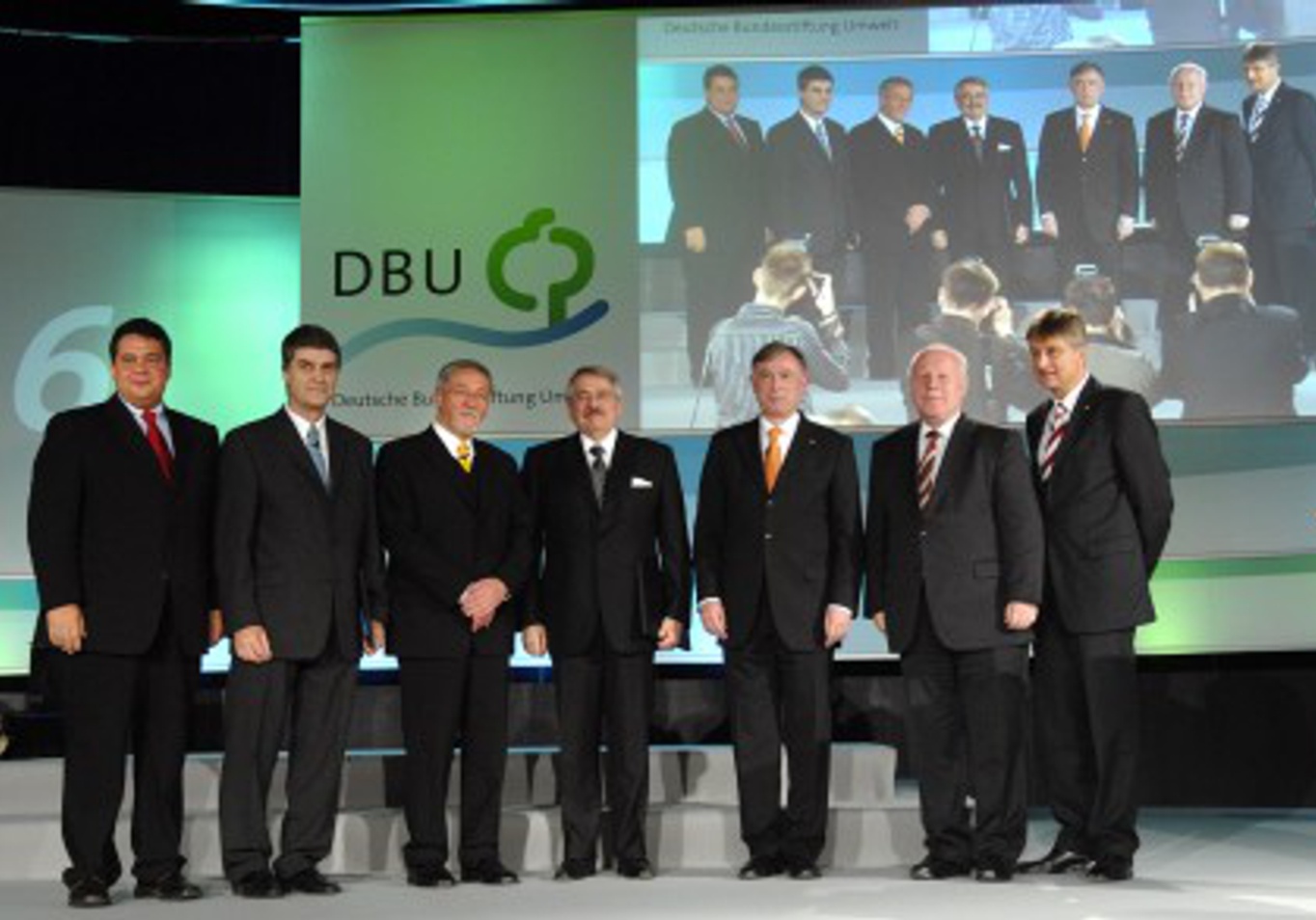
06-09-deutscher-umweltpreis-dbu-hans-huber-2-verleihung-gruppenfoto

Contact

If you have any questions, please do not hesitate to contact us!

We welcome your enquiries and want to offer you the best possible support for your projects.

  Search   Contact   Request