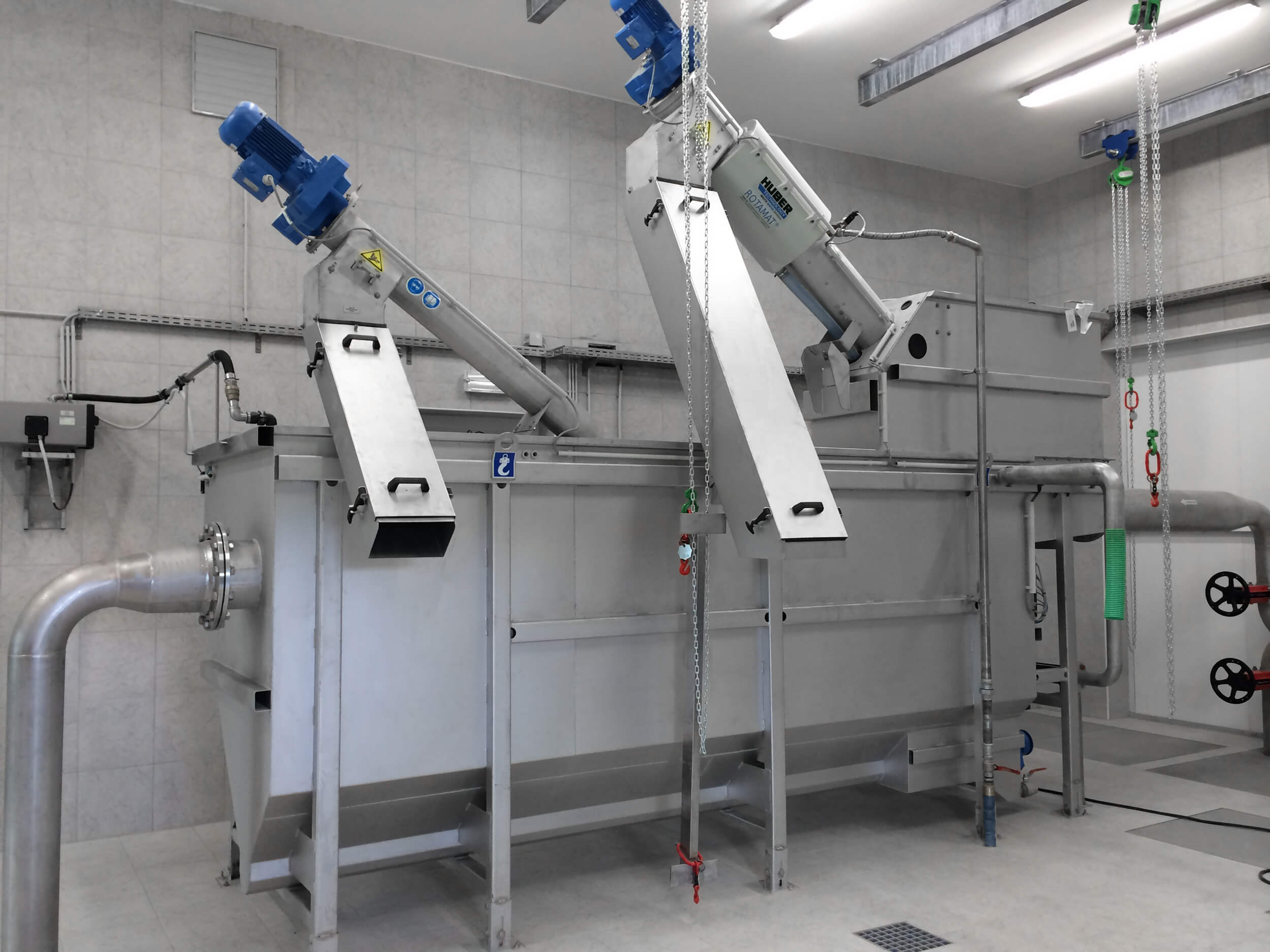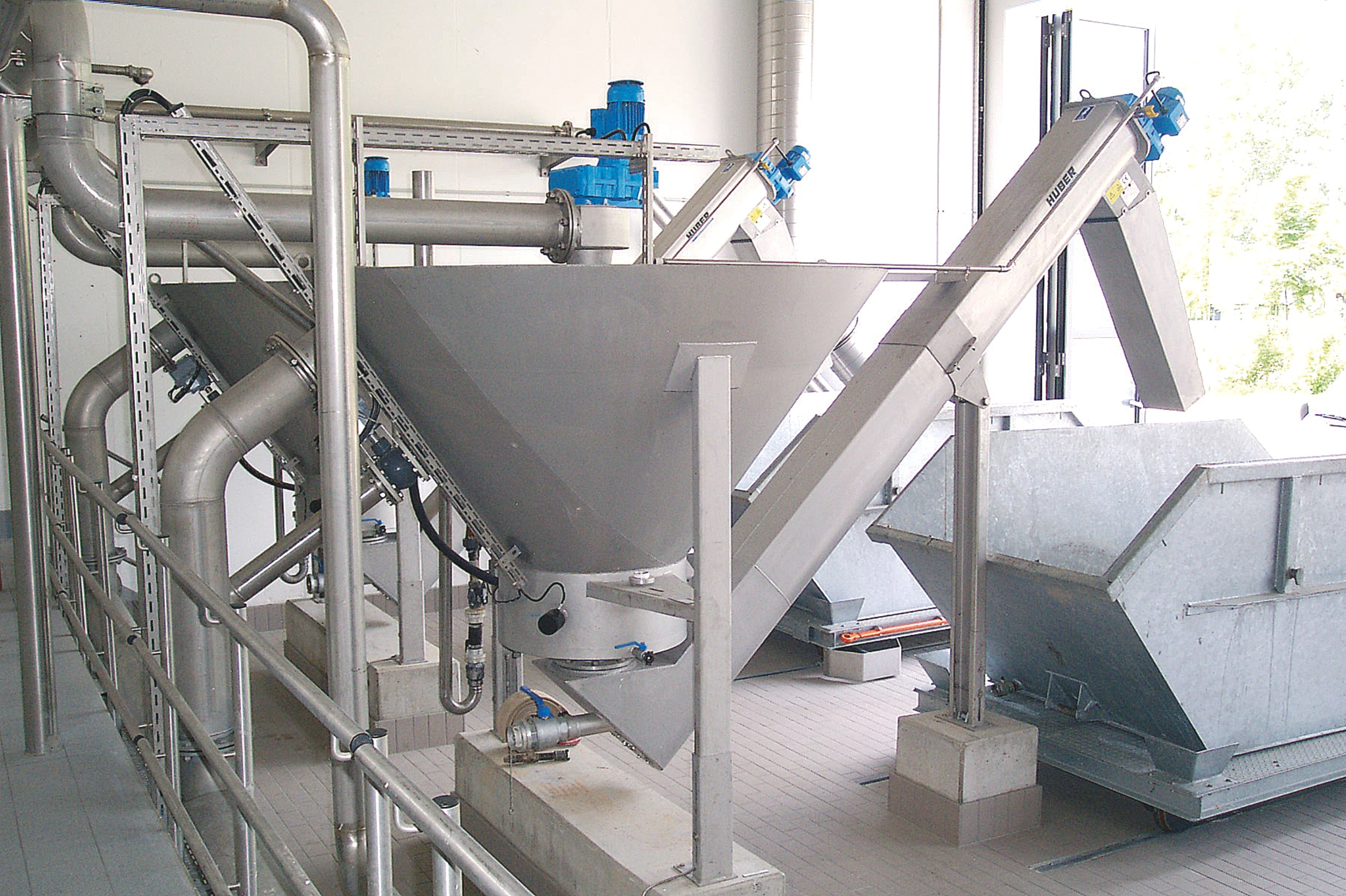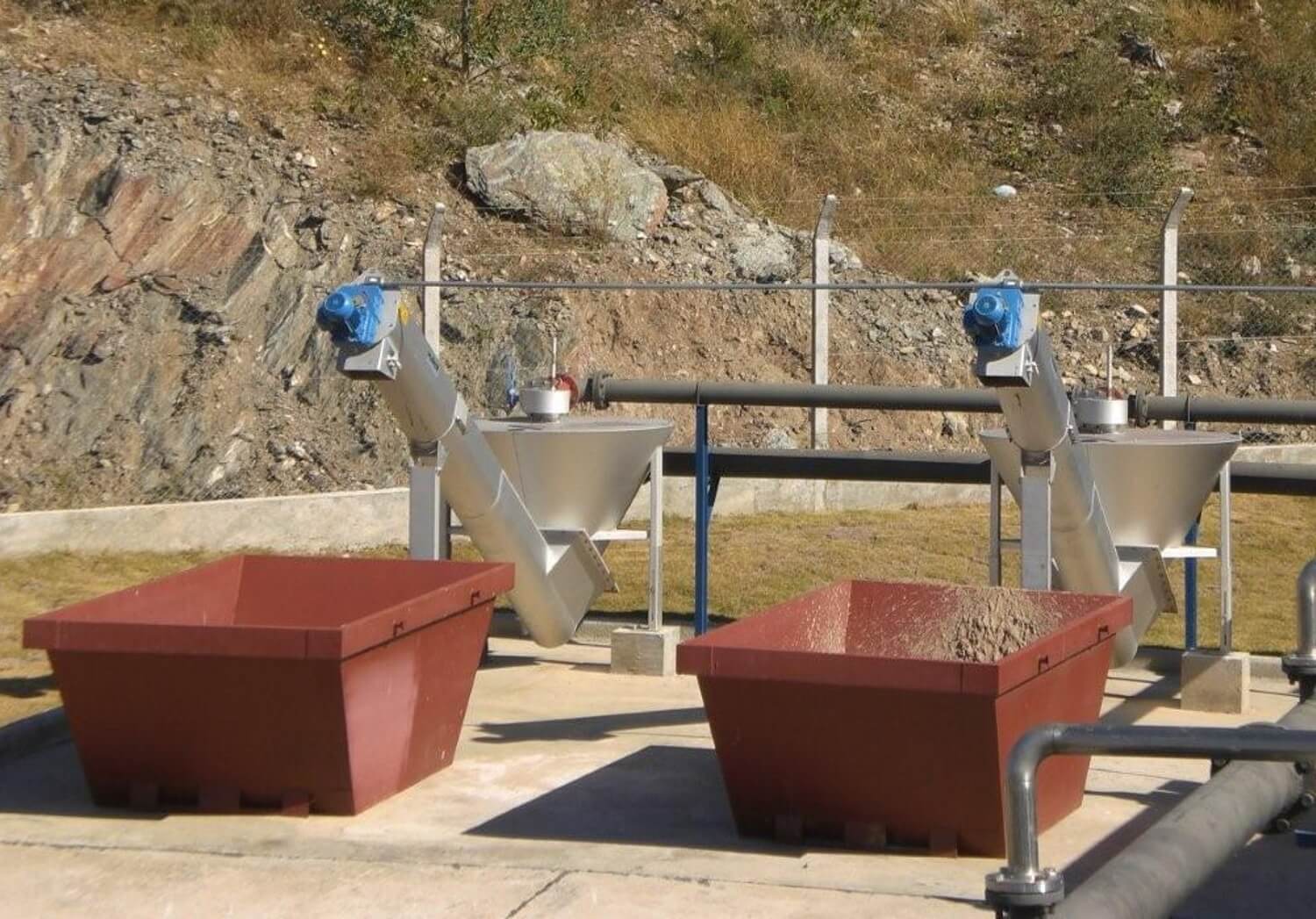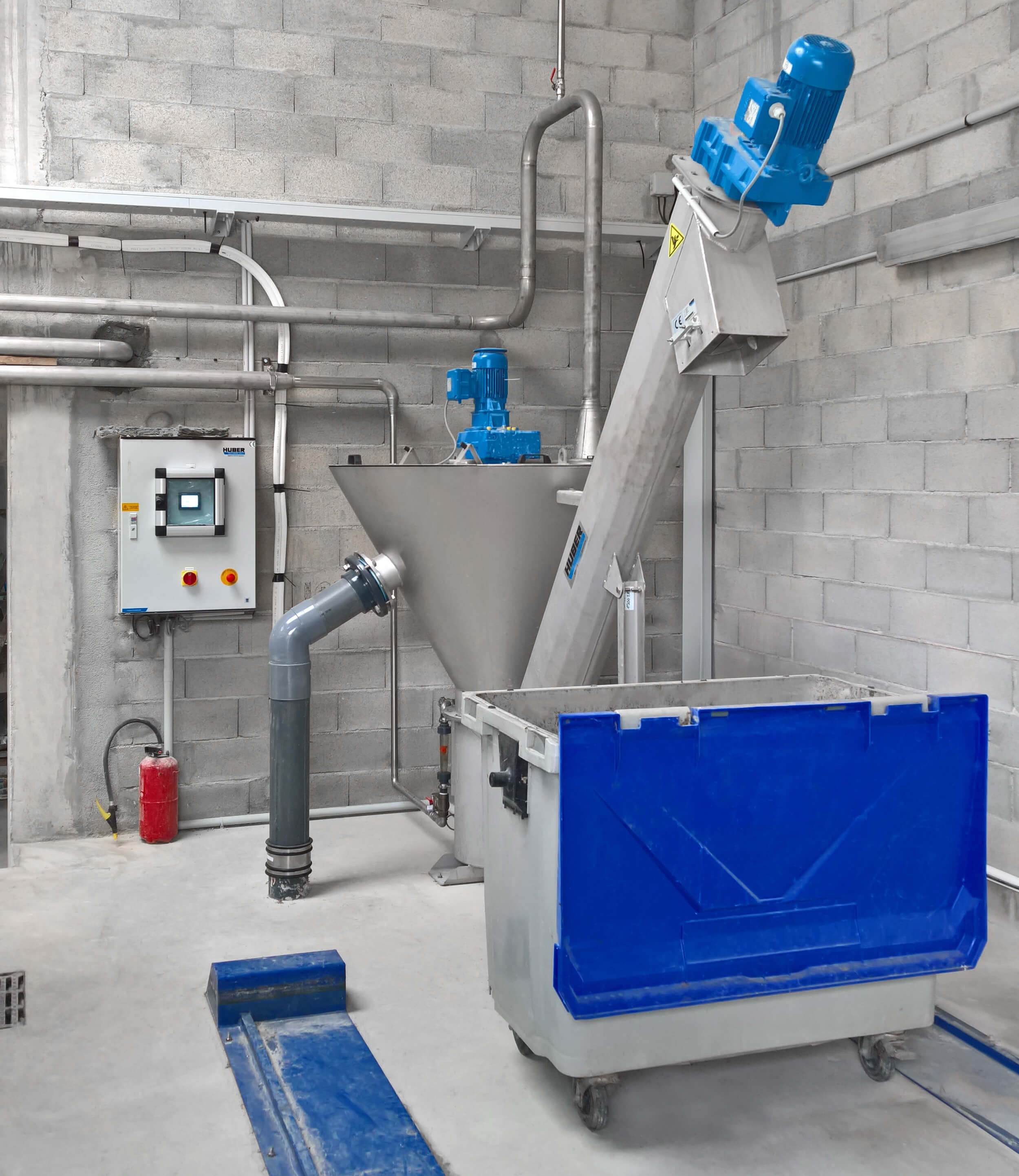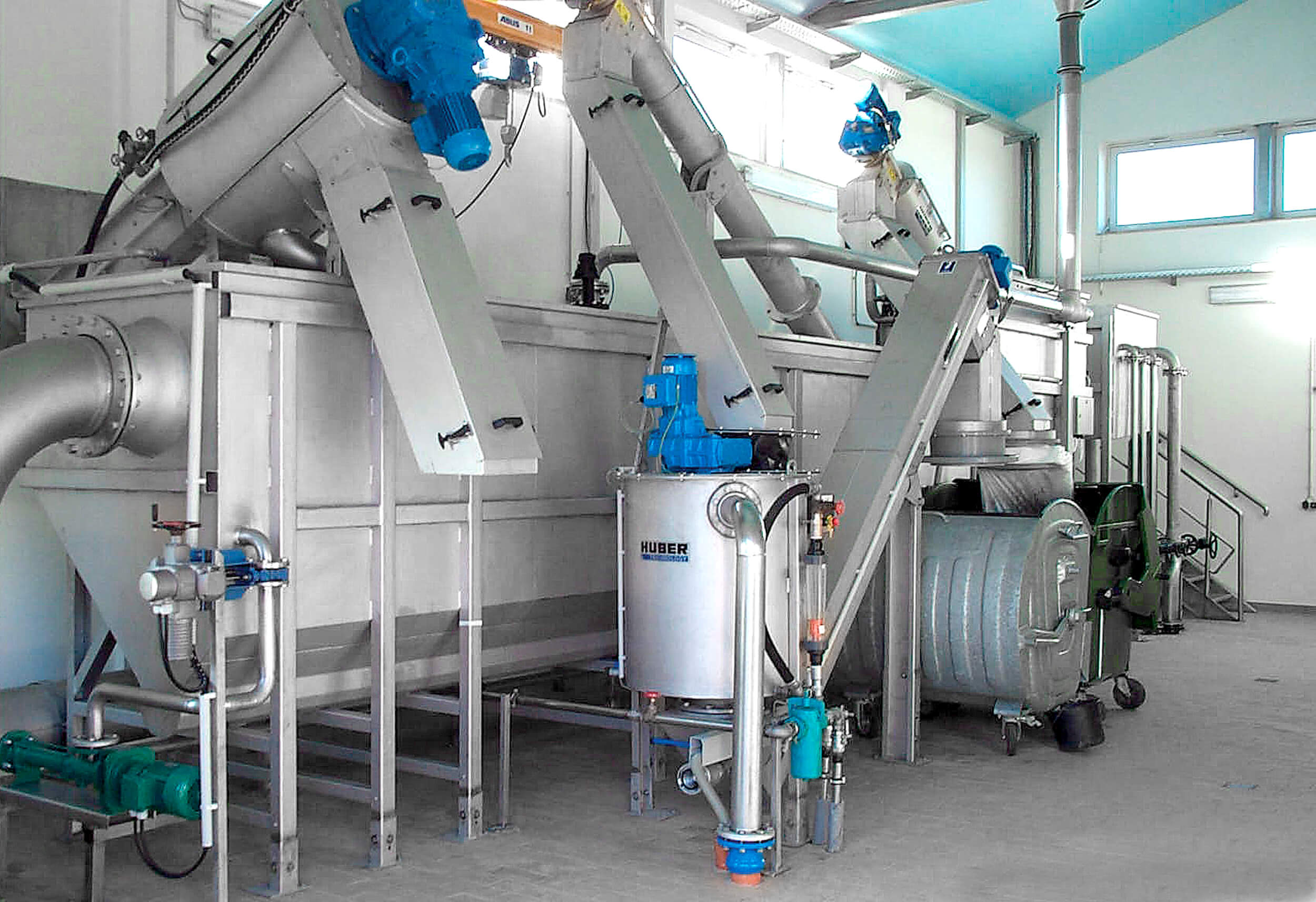
A good grit washing system is characterised by its ability to wash out the organic substances in the grit so that the loss on ignition in the washed grit is < 3%. In addition to the effective separation of organic and mineral components, the retention of fine sands is also decisive in practice, which is taken into account in the design of HUBER Grit Washing Plants.
Grit classifying and grit washing in a single and compact unit
- Reduced disposal costs
- Utilisation of the Coanda effect ensures high grit removal efficiency.
- Less than 3 % organic content
- High solids throughput
- More than 2,000 installations worldwide
The HUBER Coanda Grit Washer RoSF4 combines grit classifying and grit washing in a single and compact unit. By using the Coanda effect the process of classifying can be combined with the process of sorting to ensure a continuously high separation efficiency and outstanding washing performance.

HUBER Coanda Grit Washer RoSF4

Reliable reduction of the organic content of the grit to < 3%

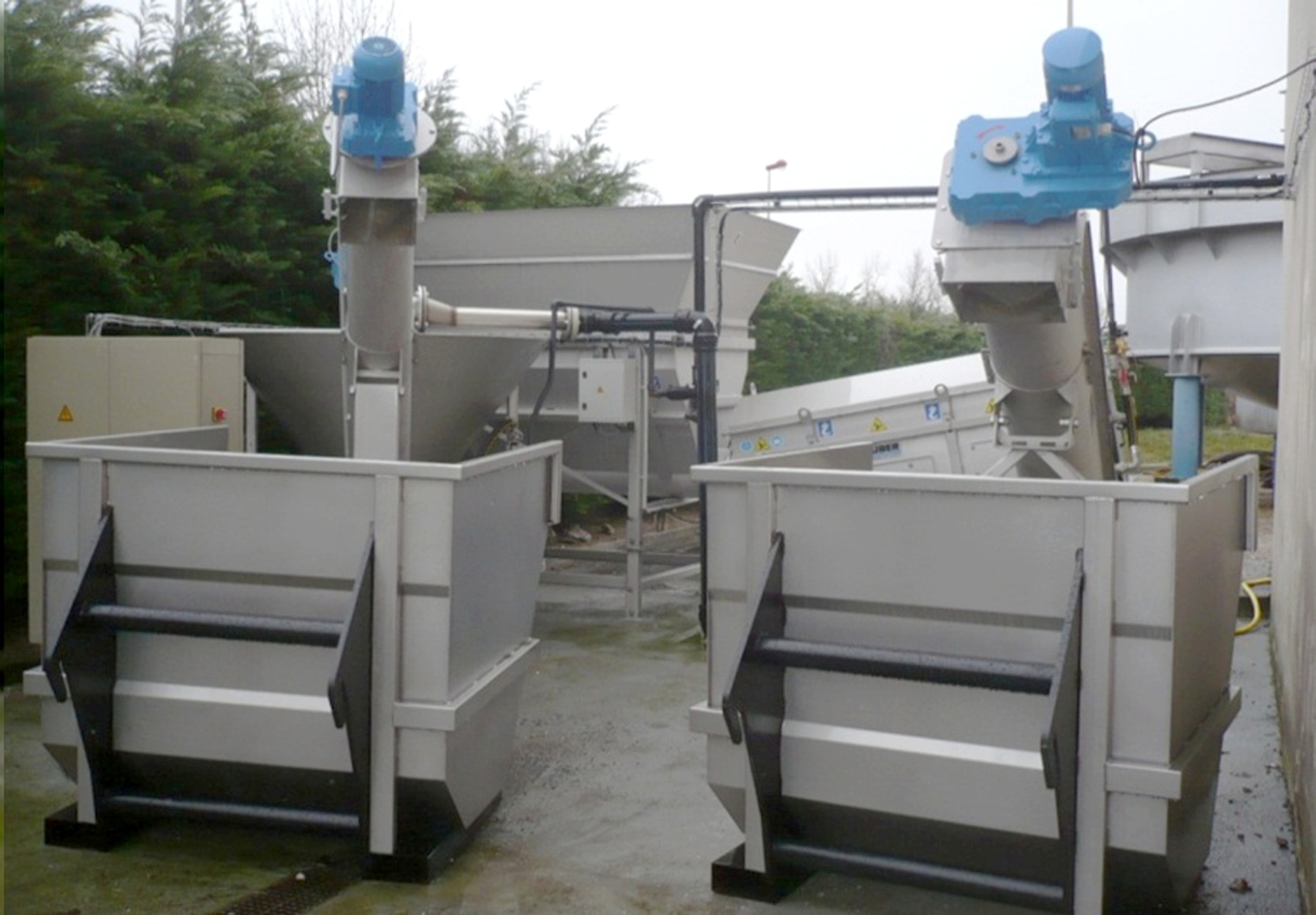
Innovative technology: HUBER Coanda Grit Washer RoSF4 size III with frost protection for outdoor installation

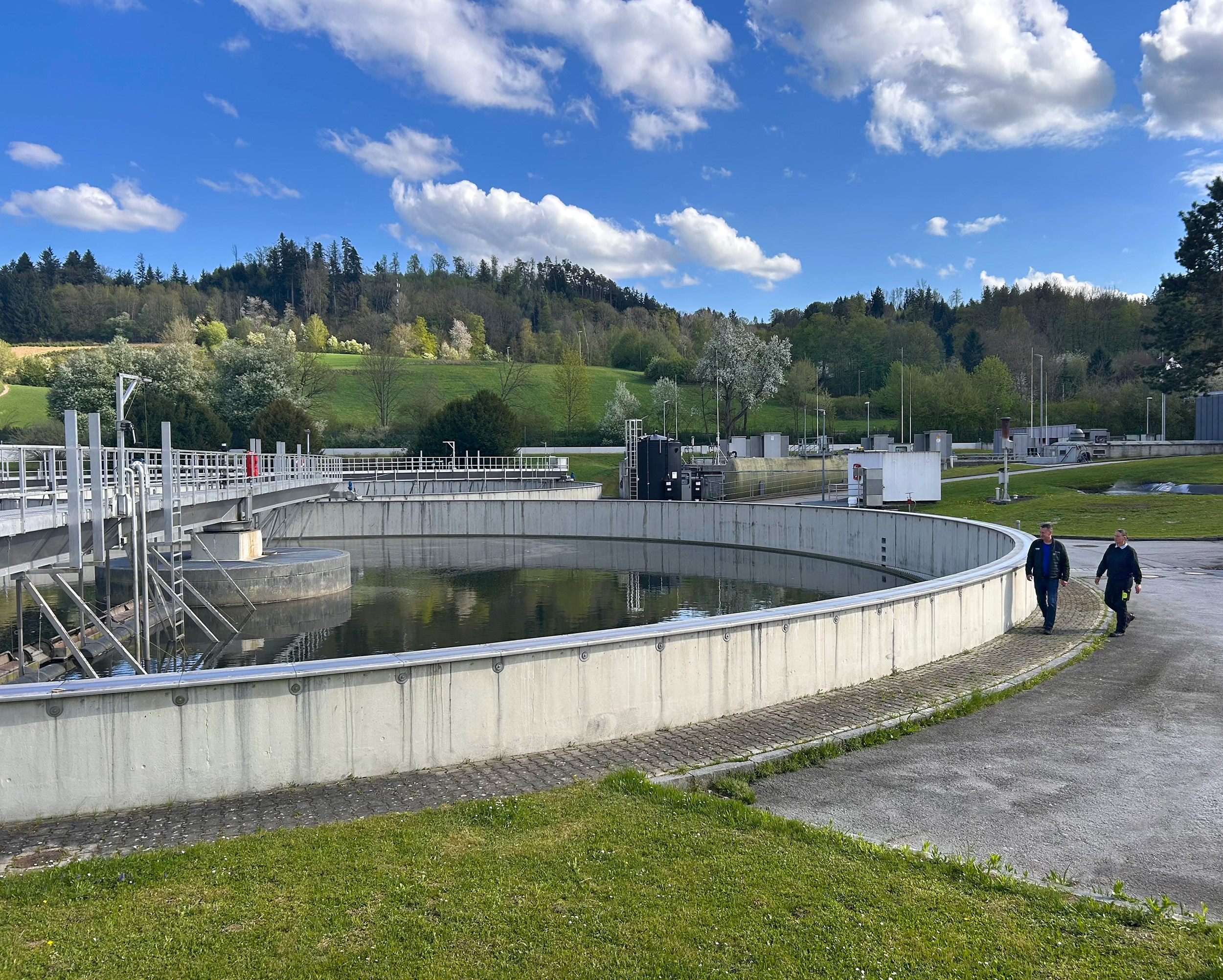
Washed grit removed at a wastewater treatment plant

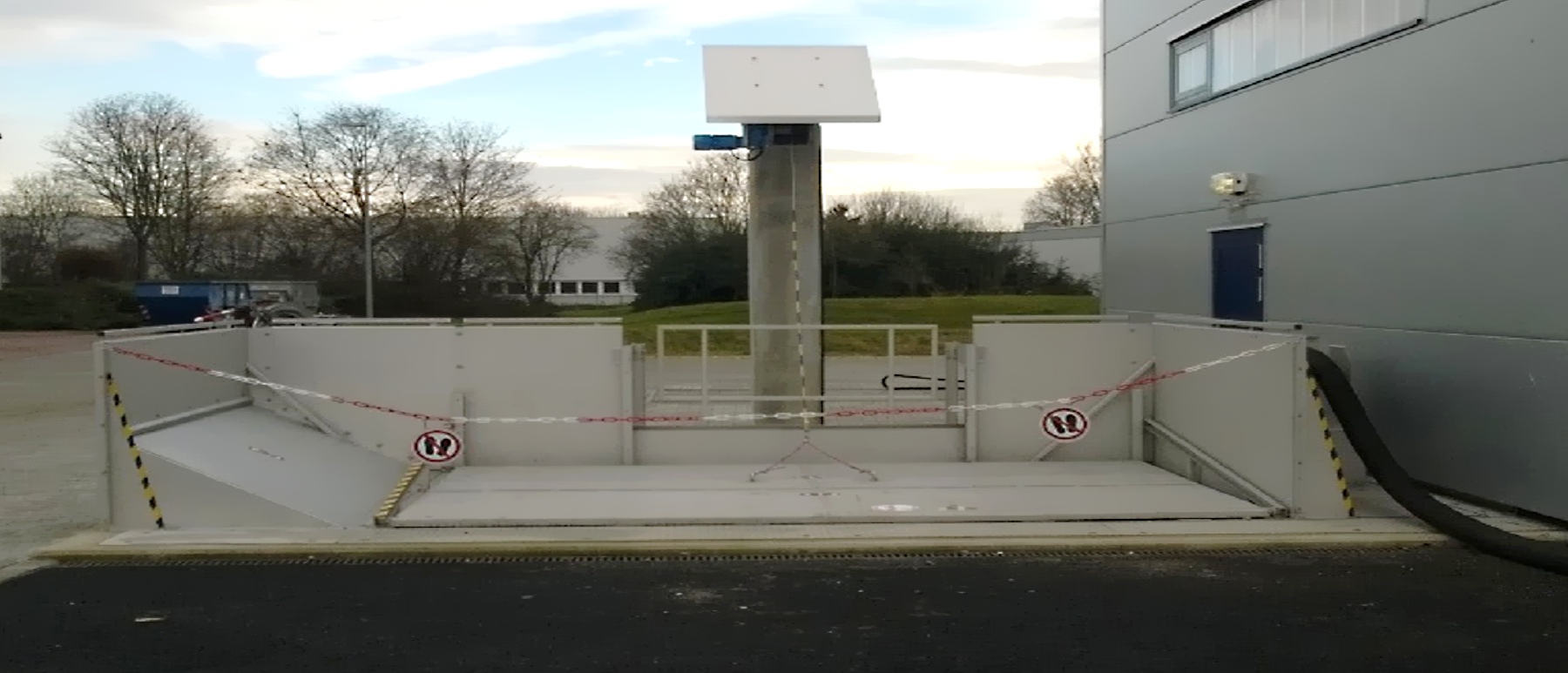
The loss on ignition of the washed grit is less than 3%

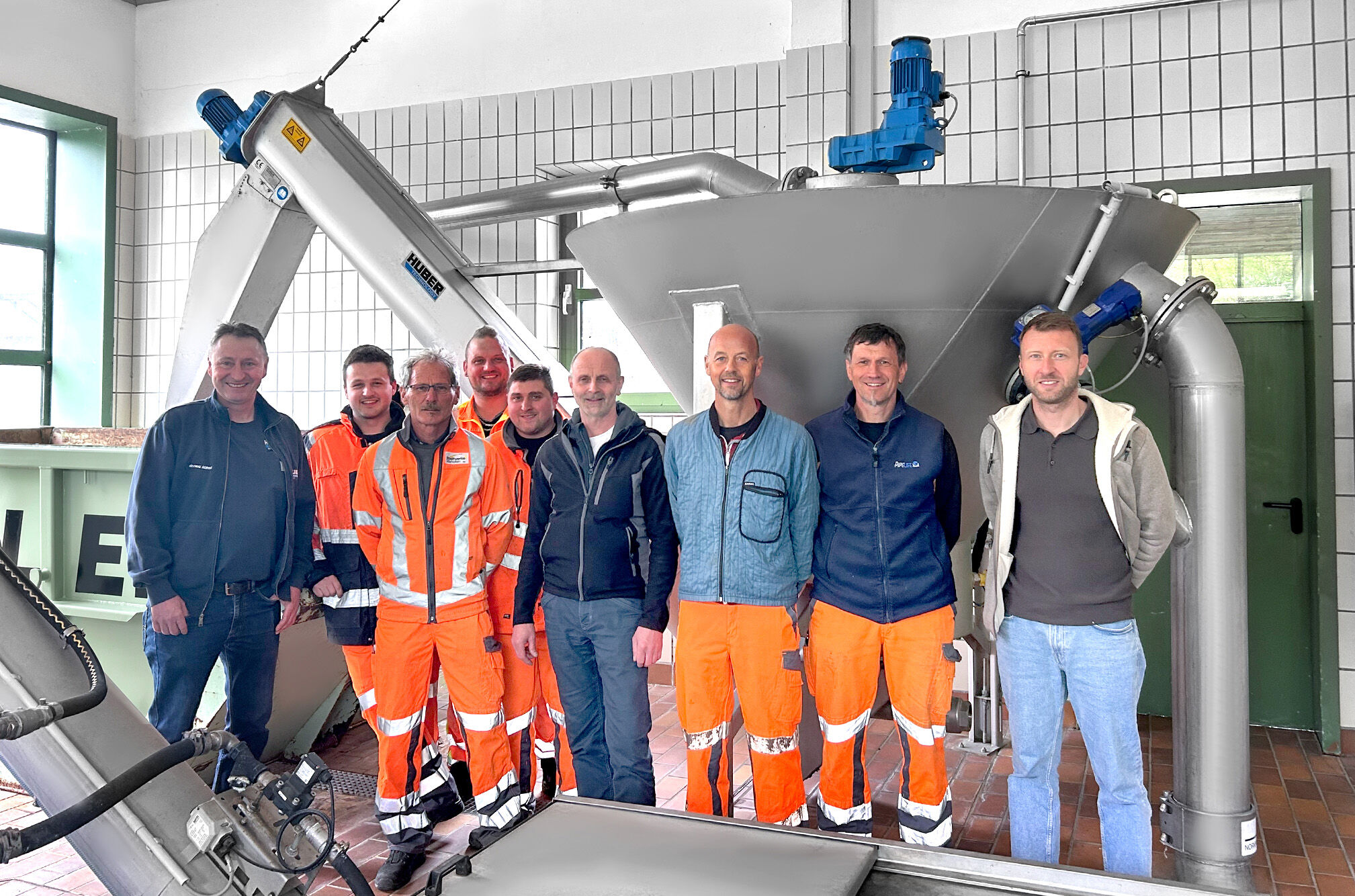
The HUBER Grit Washing Plant RoSF4 - high separation performance and best organic removal

Design and Function
Classifying with the Coanda Effect
A mixture of grit, organics and water is fed through a vortex chamber where a fast spinning rotational movement is generated. The mixture then flows down through a trumpet-shaped Coanda Tulip.
The flow is diverted along the curved inner surface of the Coanda Tulip by the Coanda effect that a liquid flow is adhering to the contour of a curved surface. The flow is thus smoothly, without generation of eddies, diverted from a fast rotating vertical direction to a gradually slower rotating horizontal direction. There is a high flow velocity along the inner surface of the Coanda Tulip, a moderate radial velocity underneath the water surface and the again high velocity at the weir.
The solids contained in the flow (grit particles, organic material) are then separated due to the flow diversion combined with flow velocity reduction, dependent upon the particle settling velocity, and sink down to the bottom portion of the tank. The excellent flow pattern in the HUBER Coanda Grit Washer RoSF4 leads to a > 95 % separation of 0.20 – 0.25 mm diameter grit particles.
The separation degree depends on the settling velocity of the solids to be separated (due to the influence of particle density and size) so that also organic material will be separated.
Fluidised bed for outstanding grit washing
The separated grit is then washed, i.e. attached organic matter is separated from the mineral grit particles. This takes place in the bottom portion of the HUBER Coanda Grit Washer RoSF4 where a fluidised grit bed is generated. Wash water is fed into a bottom chamber that is separated from the grit washer tank by a perforated plate and a perforated rubber diaphragm. The wash water flows upwards through the diaphragm and is evenly distributed over the bottom of the tank thus generating a fluidised grit bed. Within the fluidised bed the grit particles rub against each other thus removing organics from their surfaces. This process is supported by the central stirrer keeping the particles in motion.
After removal of the organic material the clean grit is removed through a classifying screw, statically dewatered and discharged into a container. The organic material left in the HUBER Coanda Grit Washer RoSF4 is removed from the plant also automatically but discontinuously, depending on the entire process, so that a defined separation capacity is constantly available.
The benefits of the HUBER Coanda Grit Washing Plant RoSF4
- No additional preceding screening required (e.g. < 4 mm)
- High grit and gravel yield
- Suitable for treatment of grit from sewers, gully waste, road sweepings
- No crushing of stones and gravel inside the plant
- The screw is supported on both ends for minimized wear.
- Optional grit removal even during grit feeding due to on-line grit level measurement
- Encapsulated, odour-free plant
- Separate organics discharge allows for separate further treatment of organics
- Large diameter screws for a high solids throughput
- Stainless steel stirrer and screw
- More than 2,000 installations worldwide give proof of customer satisfaction
- Easy to integrate into complete treatment processes
- Up to 3 m³ solids throughput per hour
Media
Videos and Animations
Downloads
Customer Information and Documents
FAQ
Frequently Asked Questions
In order to be landfilled, the grit must be further treated before. Depending on the size of the sewage treatment plant and the amount of grit, grit classifiers or grit washers are used. The state of the art is now the grit washer.
Due to the additional washing, the organic content in the discharged grit can be guaranteed below 3%. This leads to possible lower disposal costs and volumes.
Both the grit washer and the grit classifier are fed with a grit-water mix. In the machine, the grit is separated from the water.
In contrast to the grit classifier, the grit washer is able to wash the separated grit. This means that the separated grit is freed from organic components as far as possible. The grit washer thus produces grit that is almost free of organic matter, whereas the separated grit in the grit classifier may contain a considerable amount of organic matter.
In municipal wastewater treatment, grit is separated in a grit trap. This separation takes place by sedimentation, i.e. the grit settles in the grit chamber after sufficient retention time. However, since there are not only mineral substances such as grit in the wastewater, but also many organic solids, these also settle to a greater or lesser extent. As a result, when the grit is discharged from the grit chamber, it sometimes contains a large amount of organic solids. This contamination of the grit with organic matter hinders, among other things, cost-effective landfilling or reuse of the grit.
Grit washing with a HUBER Grit Washer RoSF4 solves this problem and produces clean grit with an organic content of less than 3% loss on ignition, the HUBER Grit Washer RoSF G4E reduces the organic content to ≤ 5%.